Imagining the day after tomorrow: hope in the climate crisis
This is the opinion of Lauren Sitzman, Betsy Ruckman, Nicholas Mertens, Jalayna Smith-Moore and Christian Henkels.
Are you a secret climate denier?
Sometimes we all are. Sometimes, we would rather scroll through memes than read terrifying headlines. Sometimes, we want to dismiss the climate crisis because it might not personally affect us right now. Sometimes when we try to make a difference, we think our actions are too small and we stop. Sometimes we feel that we are against hopeless odds. That’s why, subconsciously, we want to escape it or ignore it. After all, we see more stories about dystopian futures than hopeful ones. But we can’t escape climate anxiety any more than we can escape our upcoming finals.
Does this sound like something you’ve felt? We’re here to tell you that it doesn’t have to be this way. Know that you are not alone in feeling uncertain about the future. Ice caps are melting, temperatures are rising and droughts are worsening even as other parts of the world flood. In our own state, oil pipelines threaten lakes and coal plants disproportionately choke poor neighborhoods. We cannot ignore these problems, nor can we ignore ongoing industrial pollution of air and water often felt first and worst by those who lack the resources to fight back. But hopeful activists aren’t just fighting against things; they’re fighting for something. Yes, we imagine a world without corrupt fossil fuel companies and institutionalized racism. Yes, we want to hold those who are polluting our waterways and air responsible. But it is crucial to imagine what happens after they’re gone. We have the power to use our imaginations to envision and create a world we actually want to live in.
When we imagine a good future, we have simple goals. We imagine a future where our family and friends have enough time to spend with one another. We all eat delicious, nourishing food and spend our evenings playing a card game that has too many rules. We work in rewarding, engaging careers that serve the greater good. We have the time to explore the outdoors, travel the world and spend time catching up on popular TV shows without guilt or fear. We don’t determine our worth by our possessions, but by our relationships and experiences. A good future must also be climate-just. This means that we not only fight for the rights of the environment, but also for the rights of people of all backgrounds.
In ours, renewable energy powers our technology, and millions of rewarding and well-paying new jobs have been created around the world through green infrastructure. Our political representatives share the values of the people. Everyone is protected from climate impacts, but especially the poor and marginalized. Most importantly, we see a world where all people are accepted by honoring their culture, abilities, gender, sexuality, race and all the other complex parts of their identity. We see a world where that rainbow of lived experience makes the world better in a million tiny, unexpected ways.
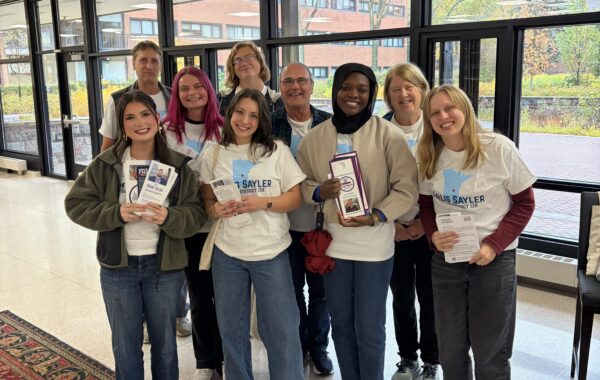
Over Easter break, we sent a group of students to a climate justice conference called Power Shift. Those students saw firsthand how many amazing scientists, artists, activists and more are giving their lives to the fight for a better world. The climate justice movement is growing, and it’s full of hope. Humans have innovated through every challenge so far, across continents and through ice ages. We survived for thousands of years and spread across the globe despite enormous differences in climate and environment, because we learned how to create relationships with the land, plants, animals and each other. That’s how Indigenous people have lived sustainably for thousands of years, and why we all need to learn from place-based and ancestral knowledge. We have reason to hope.
But to restore balance with the Earth’s systems, all people regardless of nation or race must (re)learn those relationships to serve others and the environment. We will adapt with our climate as it changes, but why can’t we see those changes as good? We may change our consumption habits or supply chains, but our connections to our environments and communities will stay. For your own mental health facing a climate-changed future, work to maintain optimism. When you feel overwhelmed by all the problems you see, imagine a world where they don’t dominate your brain space. Imagine living in a future that doesn’t stress you out. Then, ask yourself how you can create those spaces now. Center yourself in the present by focusing on sounds and sights around you. Spend time enjoying people and places you love because those things are what you’re fighting for. Wawa Gatheru said during her visit in March that these spaces are crucial to maintaining her hope. She said that in those spaces, “I am tasting the world I want to see.”
In the Introduction to Environmental Studies class, each student is assigned to create a short story or artwork that details their life in a sustainable future. Try this for yourself. What does the future look like for you? What does it feel like? Smell like? Who lives in your community? What food do you serve on game night with your friends and family? What matters to you now? What is it like to live in a world where you do not feel overwhelmed? Do these questions worry you? Picture yourself in a hopeful and happy world, or if that’s too hard look for authors who write about it (Becky Chambers is a great start).
You may or may not consider yourself an environmental activist. But we need everybody, in all kinds of roles, to participate in preserving our Earth. Through every career path and volunteer hour, through arts and humanities and sciences alike, we will imagine and create hopeful futures. Our future is still to be determined, and there’s no reason we can’t solve the climate crisis together. But first, we must all choose to imagine relationships with the Earth that are sustainable and optimistic.