Thinking about America through Spanish eyes
This article was written by Ethan Riddle, a St. John's alumnus who is serving in the Benedictine Volunteer Corps.
It’s strange to be an American abroad these days. Being in Spain, and recently having been in Mexico, there is an unspoken question on everyone’s face as soon as I introduce myself. They’re wondering if I support what my nation’s president is doing at home and across the world. There is a palpable sense of relief when they find out I don’t, and they know they can be honest with me about how scared, concerned, or angry they are with the USA’s belligerent behavior abroad and its fascistic turn at home. If you don’t believe me on the fascistic turn, all I can ask is that you consider reading the Italian philosopher Umberto Eco’s essay “Ur-Fascism” and decide for yourself.
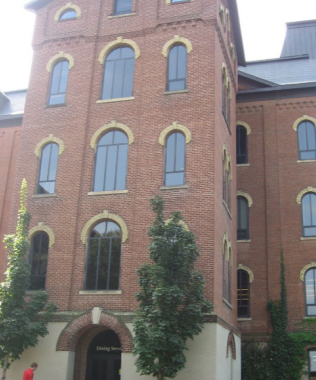
At my site near Barcelona, Spain, the memory of political division and violence is omnipresent. In Terrassa, one of the old government buildings still has bullet holes in its stone facade from Francoist troops. In Barcelona’s old town, you can see the pockmarks in the walls of the Church of St. Philip Neri, the namesake himself an advocate against war, from the bombing of a temporary orphanage. All over the Abbey of Montserrat, there are artistic portrayals and written references to the 23 monks martyred during the war. In the first-floor hall of the Escolania, where I work every day, there are photos of the choir school’s class from every year since photography first arrived in the region. The photos from 1936 to 1939 are conspicuously absent, instead replaced by a couple sentences in the regional Catalan language explaining that school was suspended due to civil war.
During those years, the nation of Spain was split in a horrific conflict brought about by economic disparities, wide swings in governance, and a coup d’etat. By the end, somewhere between 280,000 and 500,000 people were dead and the fascist-monarchist Francoists had won. The following regime, led by Francisco Franco, emphasized a Spanish identity that pushed anyone outside of Franco’s definition to the margins. Women lost the right to vote and those deemed “immoral” were placed in centers wherein they were routinely abused. Homosexuality was outlawed, and those convicted were sent to concentration camps along with an assortment of former opposition soldiers, left-wing political activists, and the poor.
Since Franco’s death in 1975, Spain has been striving towards the growth, prosperity, and freedom that his regime held them back from. With the 1977 Pact of Forgetting and the new constitution in 1978, the country agreed to move on from the days of Francoist Spain and towards a brighter future. They have since been governed mostly by the Spanish Socialist Worker’s Party (PSOE). The current Prime Minister is Pedro Sanchez.
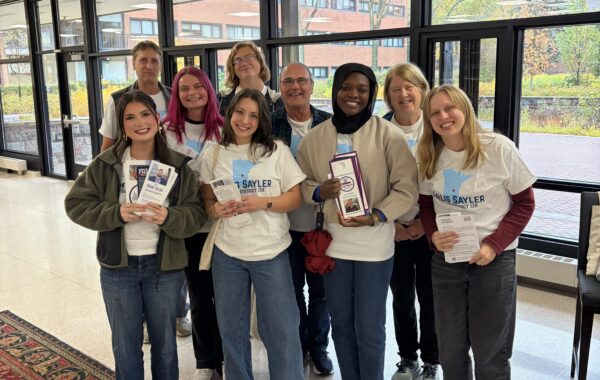
Sanchez may be a familiar name for those of us who have been following the American-Israeli war against Iran. Spain’s leader has been a leader in opposition against the participation of European nations in the war, an example now followed by Italy and others. Considering Spain’s history, Sanchez’s anti-war position is no surprise. With war and dictatorship in the recent national memory, the Spanish people know well what the people of the United States are facing. More than once here, I’ve been proud to say I come from Minnesota, where the people took to the streets to oppose ICE raids against their neighbors with some paying the ultimate price.
Even while our countries’ respective leaders are in dispute, I have never stopped feeling welcome here. While it can be strange to hear opinions on my country’s politics coming from the mouths of foreign choirboys, it is heartening to hear from the up-and-coming generation that they’re already thinking about how to make the world a better place. Between class, choir rehearsal, and recreation time, these kids are paying attention.