Navigating the nuance of a new president
This is the Our View, prepared by the Editorial Board and the institutional voice of The Record.
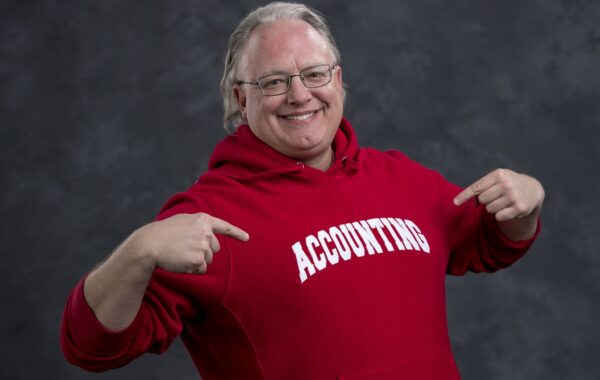
This Tuesday, CSB/SJU announced the first joint president of the two institutions, Brian Bruess. The current president of St. Norbert College in De Pere, Wis., Bruess will take office in July.
As expected, the Boards of Trustees’ Presidential Search Committee’s choice of Bruess has generated a lot of buzz—support and criticism alike—from students, alumni and off-campus stakeholders.
Much of these critiques were well-founded. The lack of emphasis on Bruess’ wife’s academic and leadership work, consideration of St. Ben’s identity and the absence of an emphasis on DEIJ work in the immediate releases are three areas which could have been referenced in greater detail.
The Record Editorial Board appreciates the dialogue, opinions and perspectives surrounding the hiring. A decision of this magnitude deserves detailed examination, and significant student engagement from the CSB/SJU community indicates a deep investment in the future of the two schools.
In some cases, commentary is not meant to be constructive, which is each individual’s right. However, providing important context may help ensure that good faith discussions are channeled in a constructive direction.
Investigating both the final decision and the process which preceded it are essential steps in forming a full opinion on the new president. This said, we fully acknowledge both the validity of all opinions and privilege an all-white Editorial Board possesses in withholding judgement.
In the Presidential Prospectus, a 17-page document mapping the selection process and criteria for prospective presidential applicants, the first sentence of the “Qualifications” section reads, “The first joint president will be Catholic.”
In theory, the “Catholic condition” seeks to account for the 50% of Catholic Bennies and Johnnies, and monastic communities’ interests in a faith-focused leader on our campuses. However, in practice, this stipulation both serves as a statistical and subliminal deterrent of non-Catholic, qualified applicants of color.
According to the Pew Research Center, 59% of Catholics in the U.S. are white and only 8% are Black, Asian or “Other.” It is clear that requiring applicants for the joint President role to be Catholic not only decreases statistical access for qualified applicants from communities of color but also signals to those communities that they are not the norm for this role.
Additionally, the Presidential Prospectus indicates a preference for candidates with previous college president experience and success in their roles. According to the 2017 American College President Survey conducted by the American Council on Education, women make up 30% of college presidents across the country, based on numbers reported for 2016.
In addition, women of color make up only 5% of college presidents. Again, in theory, this experience comes with well-founded intentions to select a candidate who can navigate complex issues. There is a sound argument that this experience is of heightened importance as the campuses navigate strong integration, the pandemic, the aftermath of sexual assault allegations, the aftermath of racial attacks, record low enrollment and new curriculum rollout. However, statistically, this restriction perpetuates the historical marginalization of women and persons of color in leadership positions.
The purpose of a job search is to find the best candidate from the pool of candidates. While students may be disappointed with the decision, the correct outlet for this frustration should be attributed to the process which restricted the applicant pool to the 8% of Catholic BIPOC and 30% of women who hold University president roles.
As a cisgendered, straight, white male, Bruess cannot relate to the marginalization of women nor persons of color. This said, blaming him for a flawed Presidential selection process is a misguided error in judgement. As reported, the final vote by the Presidential Search Committee was 21-0 for Bruess, a strong indication that he was the ideal candidate from the applicant pool.
Given these clear details, we would like to welcome Bruess to campus with the respect and grace his strong record of student-driven service deserves.
As the 8th President of St. Norbert College, Bruess’ curriculum vitae boasts robust experience. Prior to his time at St. Norbert, Bruess spent just under 22 years at St. Catherine University in St. Paul, serving as the executive vice president and chief operating officer at the predominantly female college.
At St. Kate’s, Bruess facilitated enrollment growth of 27%, while women’s colleges experienced a 21% decline nationally during the same period. Additionally, his leadership led to record holistic diversity improvement and the development of 17 academic programs in six years.
Following his time at St. Kate’s, Bruess returned to his alma mater, St. Norbert, to serve as president. A testament to his character, a group of St. Kate’s administrators and faculty members made the four hour and seven minute drive to attend his inauguration and show their support.
At St. Norbert, Bruess has an exceptional record of success: securing $80M toward a $125M capital campaign goal, stewarding record enrollment totals and leading the college to the most diverse student body in its history.
Additionally, while at St. Norbert, Bruess demonstrated his commitment to women as he stepped down following accusations of the campus’ vice president of mission and student affairs mishandling campus sexual assault cases. In response, students protested and pleaded for his reinstatement as president.
Further, Bruess will have a significant opportunity as he begins his tenure as joint president of CSB/SJU this summer. The newly created chief operating officer position offers him a tangible opportunity to signal his priorities as president. With a vacancy unrestricted by similar religion or experience requirements, Bruess will answer the question marginalized students on our campuses are considering: Does our president value the representation of women and persons of color in leadership?
The selection of CSB/SJU’s president is a nuanced issue and multifaceted question to unpack. This said, it is clear that Bruess is the best candidate given the Boards of Trustees selection requirements. We implore students, alumni and faculty to investigate his experience, research his plans for campus and withhold judgment until he arrives on campus.
President Bruess, we welcome you to CSB/SJU.