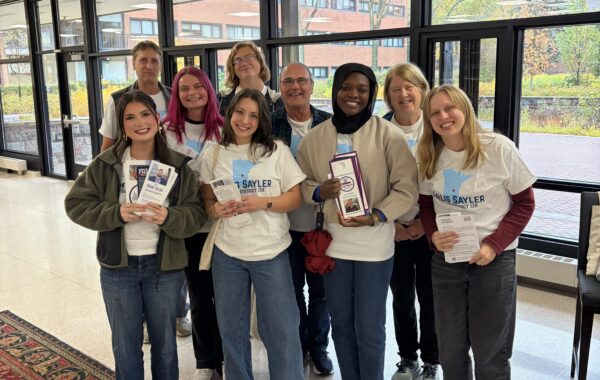
Students attend COP28
Two groups of students traveled to Dubai last semester to attend UN Climate Change Conference.
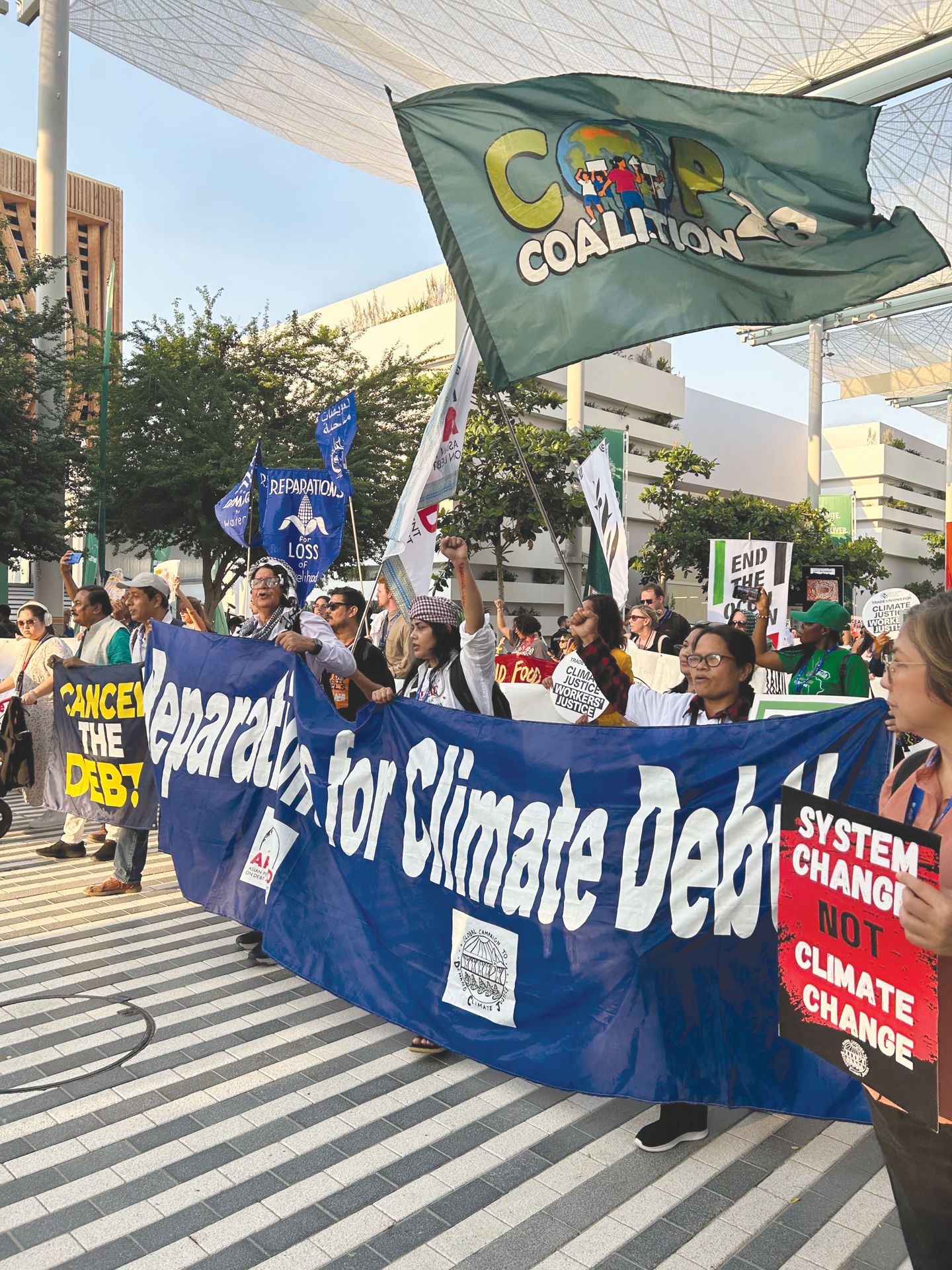
Last semester, 20 Bennies and Johnnies continued a nine-year tradition of attending the United Nations Climate Change Conference (COP28) in Dubai. The climate change conference lasted for two weeks, and the group, divided in two, each attended for a week.
In 2015, the first group from CSB+SJU attended attended the United Nations Climate Change Conference (COP21) which took place in Paris.
Chloe Anderson, a senior environmental studies major at the College of St. Benedict, attended the second week of the conference.
“I think the most beneficial part of it was definitely the community of people that are brought together,” Anderson said.
The students who attended the conference were among thousands of people from around the world who attended the United Nations (UN)-led event.
Nicholas Mertens, an SJU junior majoring in environmental science and political science, described the environment of COP28 as a fair.
“It’s like the state fair, but instead of the state fair and all the different food, it’s actually countries, government agencies and non-profits having their own booths,” Mertens said.
Only a few colleges and institutions send students to the conference because of the complicated process to get the delegate status, which is required to attend the conference.
CSB+SJU gained observer status when former professor Jessica O’Reilly, who now works for Indiana
University, and other faculty applied for observer status in 2014-15. Their work for this project has provided numerous Johnnies and Bennies with this global experience.
Research is a large part of the COP28 experience. Students are given the freedom to pick a topic for their research when they apply to get into the class.
“My research was about the Amazon rainforest, specifically biodiversity and conservation of endangered species,” Anderson said.
Mertens’ research involved sovereign wealth funds, which are pools of money that countries invest in that go to various global assets. Prior to going to the conference, students had to enroll in ENVR 305: United Nations Climate Change Conference, which is a two-credit class. This class is open to all majors, but taking it requires applying to go to the conference.
Troy Knight, an environmental studies professor, attended the conference with the students. He went to support the students and recommends students take advantage of this opportunity.
“I’ve heard over and over from people that I meet [at] the conference who have met our students, and they’re just so excited that there are young people interested and doing research,” Knight says.
Knight also mentions that he does not want students to feel discouraged to apply because of the price.
“We have had generous donations by alumni to help fund this opportunity,” he says.
When students were not getting research for their project, they were free to explore. One day, a group explored the desert and rode camels. Students also met CSB+SJU alumni and popular figures. Mertens got to meet the Norwegian prime minister as well as Hillary Clinton.
Next year, the conference will be taking place in Baku, Azerbaijan. Information for next year’s trip to the conference is already in the works. On Feb. 7, there will be an information meeting at 4:30 p.m. in the Peter Engel Science building. Applications are released on Feb. 1 and will be due Feb. 23.
This experience is open to anyone who wants to study a topic through meeting officials and professionals who attend this event.