
Early nights and dark beers: pouring stouts to warm the cold nights to come
Halloween has passed and winter is right around the corner, much to the happiness of the beer review team. Not only is the crisp winter
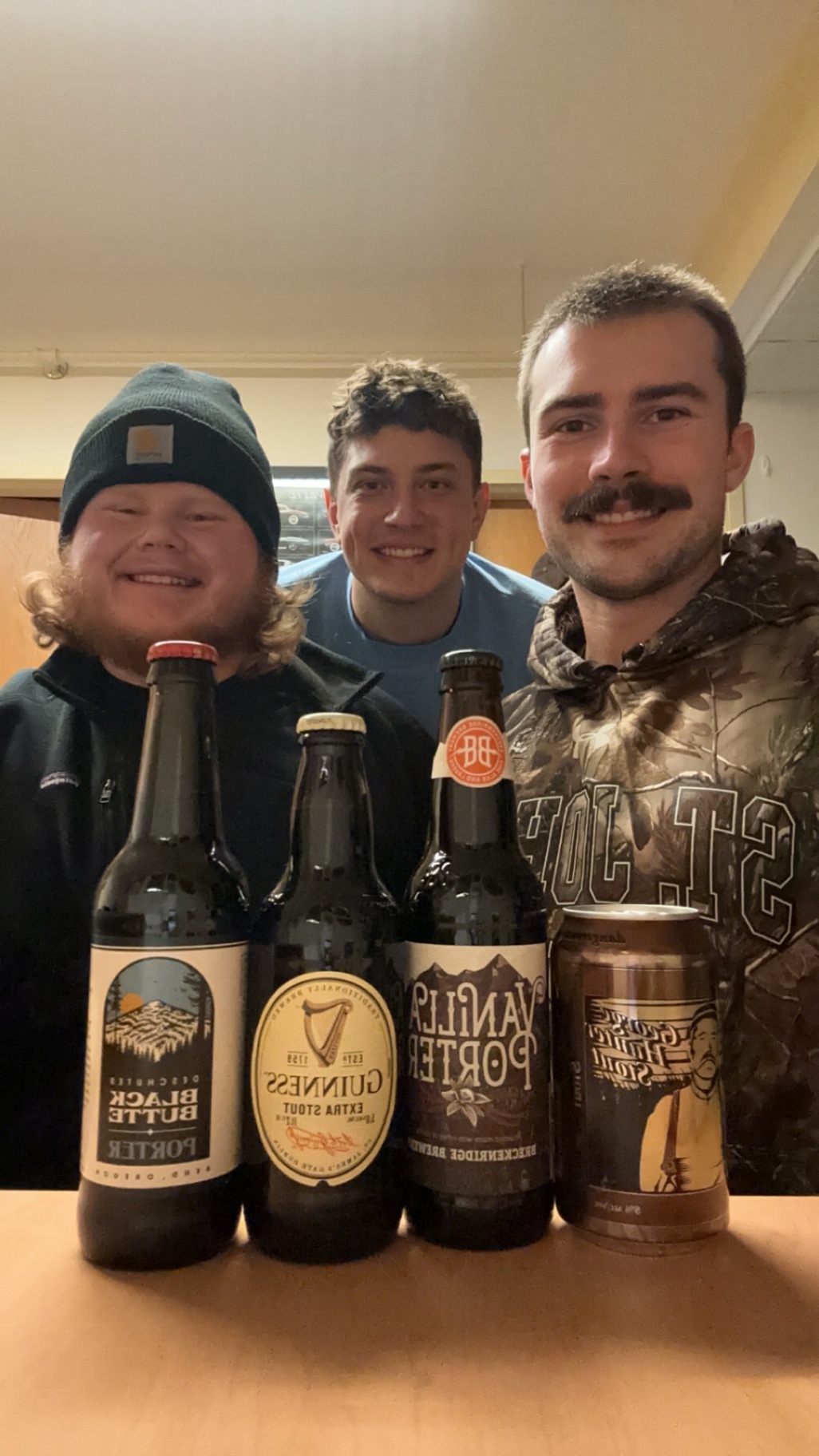
Halloween has passed and winter is right around the corner, much to the happiness of the beer review team. Not only is the crisp winter weather refreshing after a hot summer, but the season brings with it some fantastic seasonal beers. The cold weather makes the darker beers easier and more enjoyable to drink. In that spirit, we decided to try some stouts and porters from the best wintery states across the country (and one from Ireland because you can’t do stouts without some kind of Guinness). For the reference of the reader, stouts and porters are quite similar, but porters may be a bit lighter in color and not as thick.
The use of malted barley in porters often makes them sweeter and less roasty, whereas a stout is often drier and more bitter. If you’re 21 or older, explore these differences with us as we dive into one of the best seasons for beer.
Black Butte – American Porter (5.5%)
The Black Butte porter from Deschutes Brewery in Bend, Ore., was a fantastic way to kick off the review. It had a classic porter profile: roasted chocolate and coffee scents on the nose, and a nice bitter coffee flavor with a slight savory note. It was creamy; not quite as much as a Guinness, but a good transition from Guinness to the stronger porters that exist. It was certainly an easy drinker and should be a staple in any winter beer rotation. We all agreed that this beer was in our top two of the four we tasted, with it going into the first position for Caden and Andrew.
Vanilla Porter – American Porter (5.4%)
Elias’ favorite beer of the evening, the Vanilla Porter from Breckenridge Brewery in Breckenridge, Colo., was a unique take on porter. The smell was entirely vanilla, and the vanilla flavor hit quickly and was sustained through the entire beer.
There was a bitterness in the flavor, but not the strong burnt flavor that can come out in stronger porters and stouts. This beer hit spot number two for Caden and Andrew, and we all agreed that it is a fantastic choice. It is another great transition for those not comfortable with the thick, dark beers, as the vanilla flavor provides some sweetness and contrast to help new drinkers ease into the category.
Guinness Extra Stout – Irish Dry Stout (5.6%)
Of course you can’t review stouts without drinking some variety of Guinness. Because we already reviewed the classic Guinness Draught in our international beer review in the Oct. 10 edition, we decided to lean into the stout category with the Guinness Extra Stout.
Extra Stout is much more reminiscent of an American stout, as it isn’t nitrogen-infused and is much darker than the Draught. It certainly holds up to the dark, bitter nature of an American stout. The smell was bitter, and the flavor was just like a draught with more bitterness and a darker personality. It was incredibly roasty and would fall on the stronger side of commercial stouts, almost at the level of a thick craft stout. It’s a great beer, but if you’re going with Guinness, you can’t beat a classic Draught.
George Hunter Stout – American Stout (8.0%)
For the last beer of the evening, we took it home to Minnesota with a stout from Castle Danger Brewing in Two Harbors. The George Hunter Stout is named after the Castle Danger’s founder’s great-great-grandfather, who operated a brewery in Tower, Minn., before prohibition. Unfortunately, the beer itself was not Andrew and Elias’ favorite.
It had a slightly bitter smell and a good amount of tang. There was an interesting blend of sweet, malty and creamy flavors.
Overall, it wasn’t too harsh but was not nearly as friendly as a Guinness Draught. We thought that there were too many competing flavors here that detracted from the beer.