
A critical reflection of a beloved film: ‘Mr. Smith Goes to Washington’
The cinema of Frank Capra is often seen as a collection of modern fables about honest underdogs standing against corrupt systems, where heroes defy the
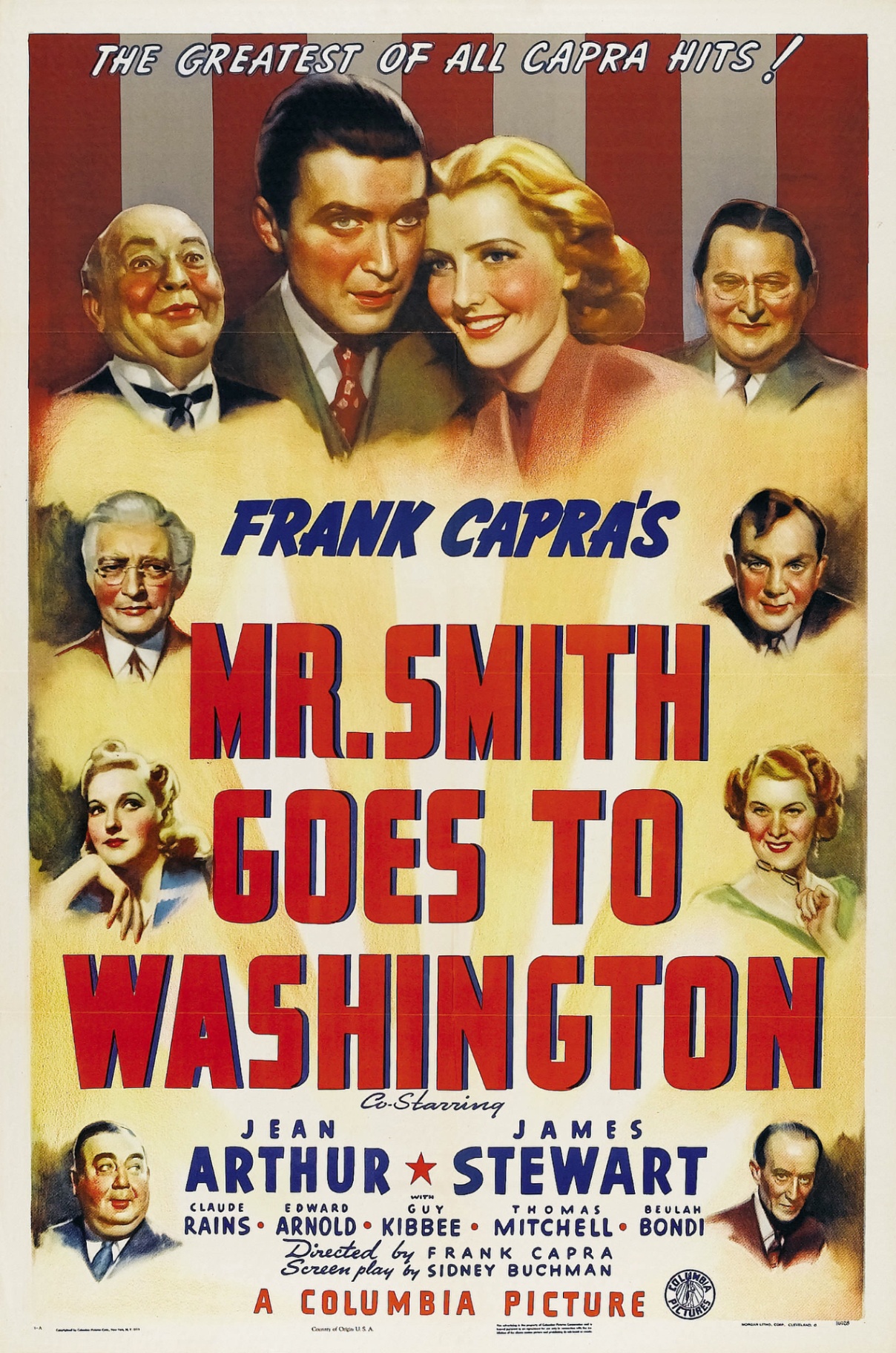
The cinema of Frank Capra is often seen as a collection of modern fables about honest underdogs standing against corrupt systems, where heroes defy the odds and fight for their principles even in the worst adversity. An Italian immigrant who rose to become one of Hollywood’s most influential directors, Capra authored celebrated films like “It’s A Wonderful Life,” “It Happened One Night,” “Arsenic and Old Lace,” the World War II-era “Why We Fight” series that countered Leni Riefenstahl’s propaganda, and of course, the classic “Mr. Smith Goes to Washington.”
“Mr. Smith Goes to Washington” follows a young idealistic Boy Ranger leader Jefferson Smith (played by the hypnotizing James Stewart) who, following the death of a senator from an undisclosed western state, is chosen by a spineless puppet of a governor to fill out the end of the dead senator’s term. This is done in hopes that the patriotic idealism, well-to-do-ness and harmlessness of Mr. Smith would make him a popular, if easy to control, cog in the political machine.
While Smith is supposed to do as he is told and not make trouble for experienced senators, with his new bill to establish a national boys camp in the wilds of his home state he finds himself in conflict with the interests of a corrupt, political monopoly of businessman Mr. Taylor who has in his pocket Smith’s counterpart, Senator Joseph Paine (Claude Rains). Smith, for his effort, is manipulated by Senator Paine, who then brings forth charges of forgery and demands senatorial expulsion for Smith.
At the end of the film, as Smith is about to be voted out and removed from the office, with the help of his aide, Saunders (Jean Arthur), Smith delivers a moral plea and mounts a challenge to Taylor, Paine and the corrupt politicians in Washington in the form of a twenty-four hour long filibuster speech that turns the dirty hearts of the congressmen pure again, and Senator Paine, who experiences the attack of a guilty conscience, confesses to everything, as the tired Smith faints.
Though “Mr. Smith Goes to Washington” is beloved for its earnest storytelling and James Stewart’s iconic performance, it also paints an overly simplistic picture of political corruption, leaving critics to debate whether Capra’s message truly serves democracy or simply champions an unrealistic, populist rhetoric.
In the film, Jefferson Smith is the only person in government who has respect and fondness for American patriotic values, while remaining untainted by the influence of what the film frames as the corrupt political elites. Smith’s passionate, morally driven stand against corruption, whilst deeply compelling, dramatic and to a certain point commendable, if heavy handed, highlights at the same time a populist narrative at the core of the film.
The romanticization of small-town values against big-city corruption gives audiences a sense of moral clarity, providing a stark contrast between good and evil that is emotionally satisfying and morally affirming. By casting Smith as an unwavering beacon of honesty surrounded by a uniformly corrupt establishment, the film reduces complex political dynamics to a battle of good versus evil, where the only remedy for corruption is the appearance of morally unassailable individuals. It frames democracy as a zero-sum game, where power and morality rest solely in the hands of good or bad people. The film’s implication is that individuals of unbreakable moral character are the solution to corruption, bypassing any deeper consideration of systemic reform or collective action as routes toward a healthier democracy.
While the film’s portrayal of political corruption remains relevant, it is critical to contextualize its message within the limitations of Capra’s vision. A robust democracy relies not only on individuals of integrity, but also on strong institutions, a commitment to pluralism and respect for minority rights. By sidelining these elements, Capra’s film, while inspiring, presents a vision that, if taken as political prescription, may offer a mistaken solution.
The film’s craftsmanship, however, deserves recognition. Capra’s direction, combined with Stewart’s unforgettable performance, captures the emotional stakes of idealism colliding with political reality, particularly in Smith’s climactic filibuster. Capra’s skill in evoking moral clarity through simple, evocative storytelling is part of what makes the film a classic, inviting audiences to root for the lone hero even as they question the film’s idealistic premise. Stewart’s portrayal of Smith as both earnest and resolute provides depth to a character who could easily feel one-dimensional, making his stand in the Senate one of the most memorable in cinematic history.
In a time when democratic institutions are often tested by polarization and authoritarian populism, “Mr. Smith Goes to Washington” encourages viewers to believe in their own power to make a difference, while also necessitating a critical reflection on the need for institutional integrity, accountability and the collective responsibility required to uphold a truly democratic society.