Professor proposes change to legislation
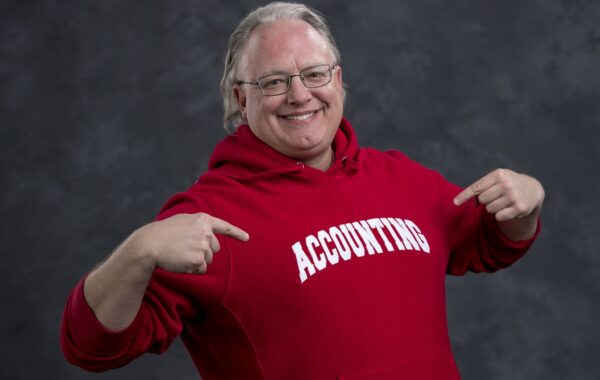
CSB+SJU accounting professor Boz Bostrom is leading a campaign to decrease to number of credits required to receive a Certified Public Accountant license.
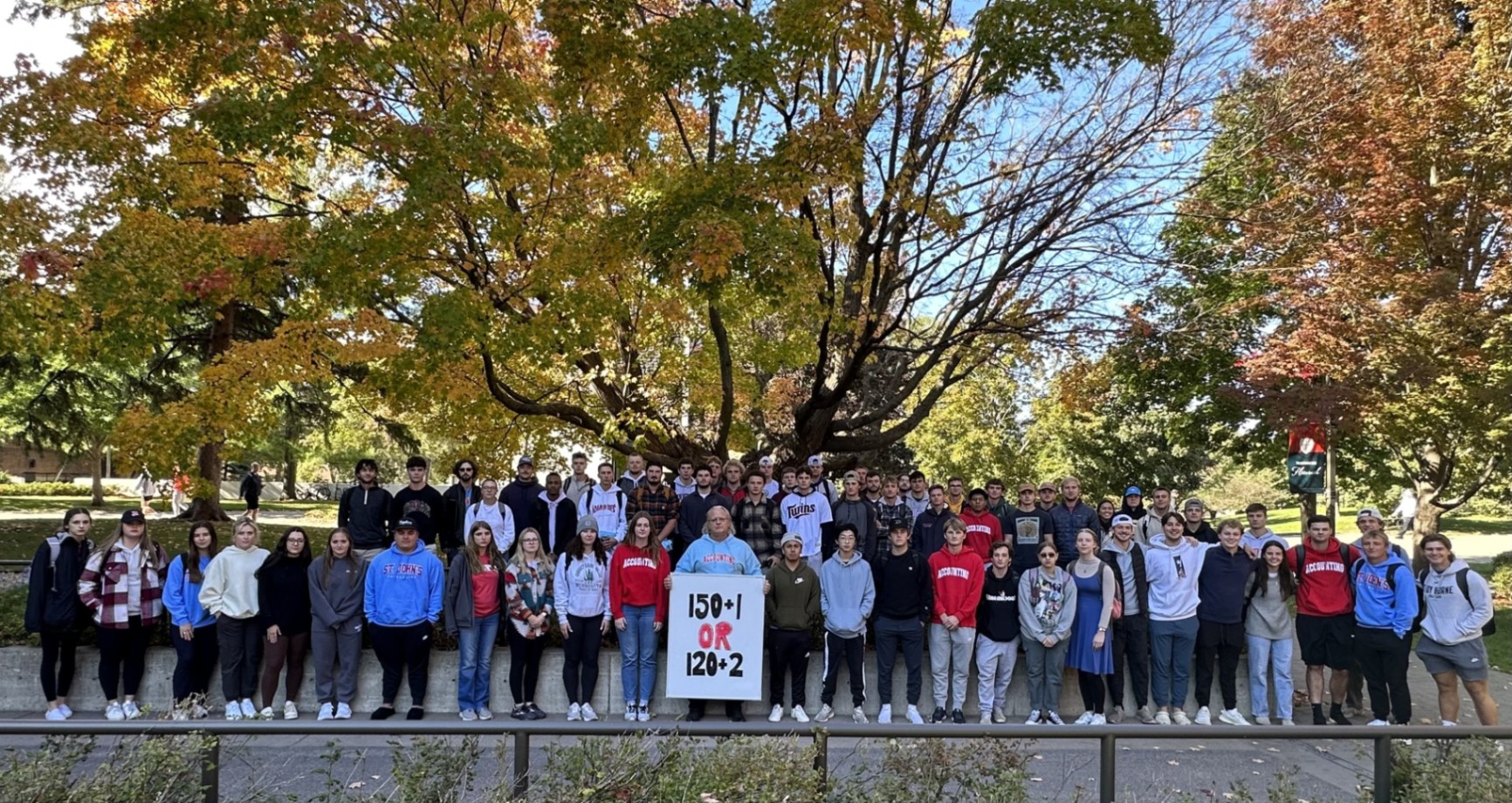
In the current Minnesota legislative session, state representatives and senators will consider a bill introduced in part by one of CSB+SJU’s own: accounting professor Boz Bostrom.
The Minnesota Society for Certified Public Accountants (MNCPA), of which Bostrom is a board member and chair-elect, proposed new legislation that would adjust the requirements needed for students to become CPAs in February 2023. Though it failed to make it out of a legislative committee last year, it is up for assessment again for this year’s session, which began Feb. 12.
The initiative, titled “Broadening Pathways to CPA Licensure,” offers an alternative to the current CPA licensure requirements, motivated by a nationwide accountant shortage and additional education costs for prospective CPAs. Minnesota would be the first state to pass this alternative.
“It is painful for me that the public does not have accountants to serve their needs to help them with taxes, to help them with accounting,” Bostrom said. “And it’s also painful for me to watch our students, particularly students of color, be burdened by the additional cost and time that is not valued by the public.”
Currently, students interested in becoming a CPA must complete 150 credit hours, gain one year of work experience and pass the CPA exam to become a CPA. The alternative introduced by the MNCPA would require 120 collegiate credit hours, two years of work experience and a passing grade on the CPA exam.
If passed, the bill will not eliminate the current path; it will just offer another possible route to CPA licensure. Bostrom estimated that the bill would come up in the legislature sometime in May. With the current rule in place, prospective CPAs without college credit from high school often take extra credits during the school year or over the summer, or they attend college for an additional year to earn a master’s degree.
CSB+SJU seniors and accounting majors Cole Swisher and Lauren Pfeffer each said they’ve taken 18 credits almost every semester of college along with several summer classes to meet the 150-credit hour requirement.
The current rule does not specify what classes the additional credits must come from. Thus, students like Pfeffer and Swisher take 26 credits beyond CSB+SJU’s required 124 to graduate in subject areas that don’t apply to accounting.
“The thought is there, but I don’t think it was executed how they thought it should be,” Pfeffer said. “If it was maybe certain classes that you were required to take that would be useful in the field, then it would maybe make sense, but right now it’s just stupid classes simply to get the credits.”
Pfeffer said that some of her credits have come from online walking, keyboarding and jogging classes, none of which directly relate to the field of accounting. For both Pfeffer and Swisher, additional courses over the summer, whether online or through a community college or CSB+SJU, have cost them thousands of dollars on top of their tuition.
Bostrom listed three main sources of opposition going against the proposed changes: the National Association of State Boards of Accountancy (NASBA), the American Institute of Certified Public Accountants (AICPA) and colleges and universities with accounting master’s programs.
For the NASBA, the change could create additional work for them in ensuring that CPAs are properly licensed if they leave Minnesota. Currently, every U.S. state has the same laws regarding CPA licensure requirements, which allows CPAs to freely perform services in multiple states.
Bostrom said he hopes that other states will follow suit if the bill passes in Minnesota. This would allow CPAs certified under Minnesota’s alternative to work elsewhere.
“If we pass this, I think that that’s going to start opening the floodgates,” Bostrom said. “I think more and more states are going to start doing this, and I think it would eventually lead to a national change that way.” On top of expressing concern about CPAs’ potential for mobility, Bostrom said the AICPA additionally “believes [the 150-credit hour rule] has elevated our profession.”
The AICPA and the Chartered Institute of Management Accountants (CIMA) released an article opposing the bill on Monday. The article, titled “How lowering the accounting education requirement risks CPA mobility,” covers concerns about both mobility and job preparation.
“Any solutions must maintain the rigor needed to protect the public while providing flexibility for candidates of all backgrounds,” the article said. “Instead of opening doors for accounting students and CPAs, the Minnesota bill will quite literally close them.”
In an Oct. 5, 2023 article supporting the bill, Bostrom cited several studies to back up the proposal. One of these studies, conducted by an accounting professor at St. Louis’s Washington University, said the 150-hour rule reduced students taking the CPA exam by 15%. Another report produced by the Center for Audit Quality found that the 150-hour rule was the primary reason for business majors’ decision not to study accounting. It noted that 49% of Hispanic and 46% of Black students listed the current rule as a major barrier.
“For me, I don’t think [a change to the 150-hour rule] would have mattered,” Swisher said. “But I could see for other students, if they don’t know what they want to do for the first year and then they look into accounting—if you don’t have the summer classes or credits coming in, it dissuades you a lot.”
The new bill could financially impact other colleges and universities, as students would no longer need to pay for extra credits. This would especially harm schools with master’s programs in accounting, as students could opt for more experience instead of education.
For Bostrom, regardless of whether it hurts or helps colleges’ pocketbooks, it’s all about the students.
“The profession doesn’t demand a master’s degree,” Bostrom said. “The St. Ben’s and St. John’s students that come out of undergrad are performing at least as good, if not better than the students getting master’s degrees from [other schools].”
Both Swisher and Pfeffer expressed appreciation for Bostrom’s dedication to the proposed legislation. For Pfeffer, there’s no one else she’d rather see pushing for change.
“I don’t think there is a better person to do it because he does just have such a reputation—a positive one at that,” Pfeffer said. “He’s not wordy and technical; he makes it to the point. I don’t think there’s someone else who could have gotten it as far as it has.”