Author shares experiences with race and politics in public reading
Hanif Abdurraqib, a poet, essayist and author from Columbus, OH, engaged students in a public reading where he shared his poems and excerpts from his new book 'There's Always This Year.' After his reading, students were invited to participate in a Q&A session.
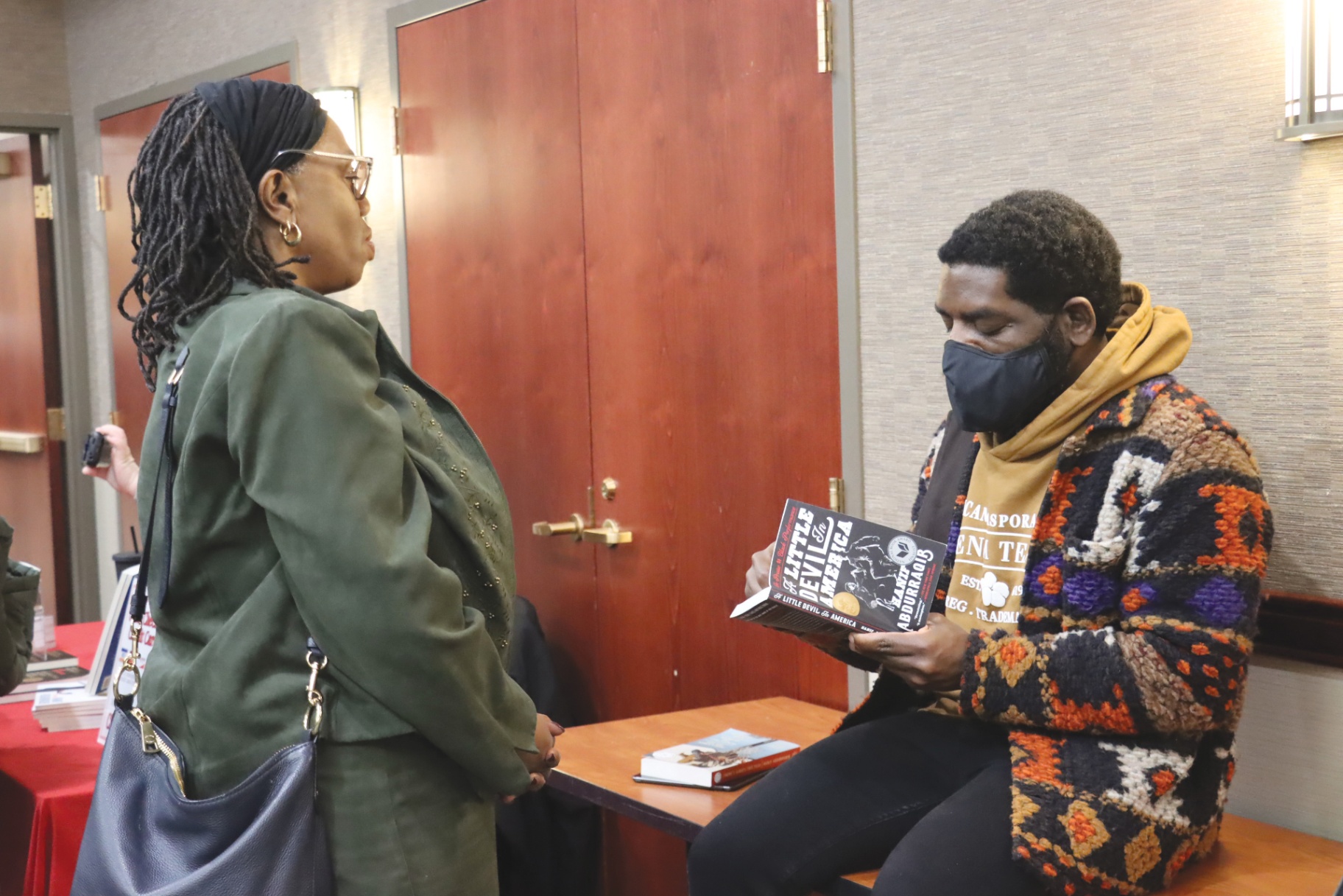
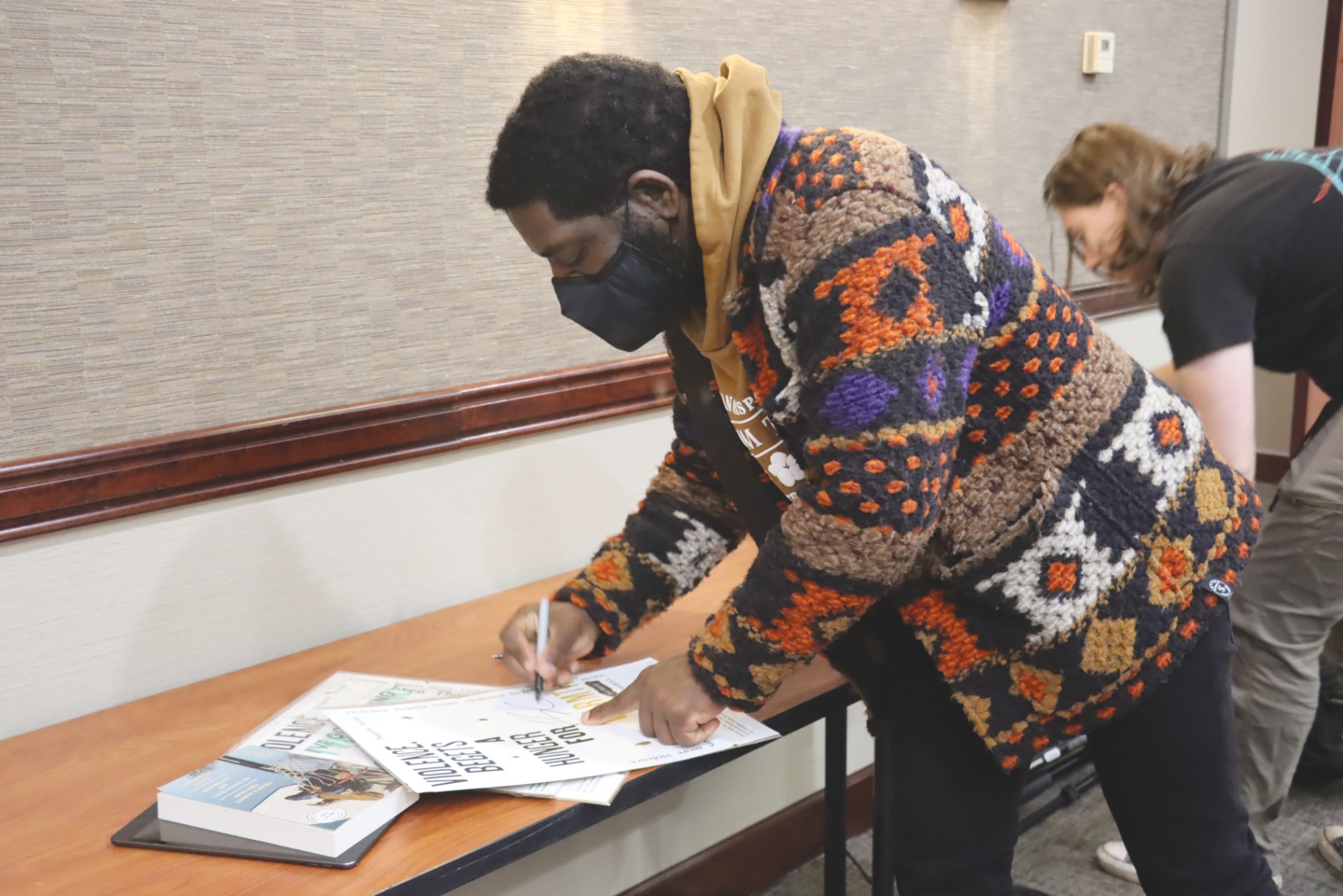
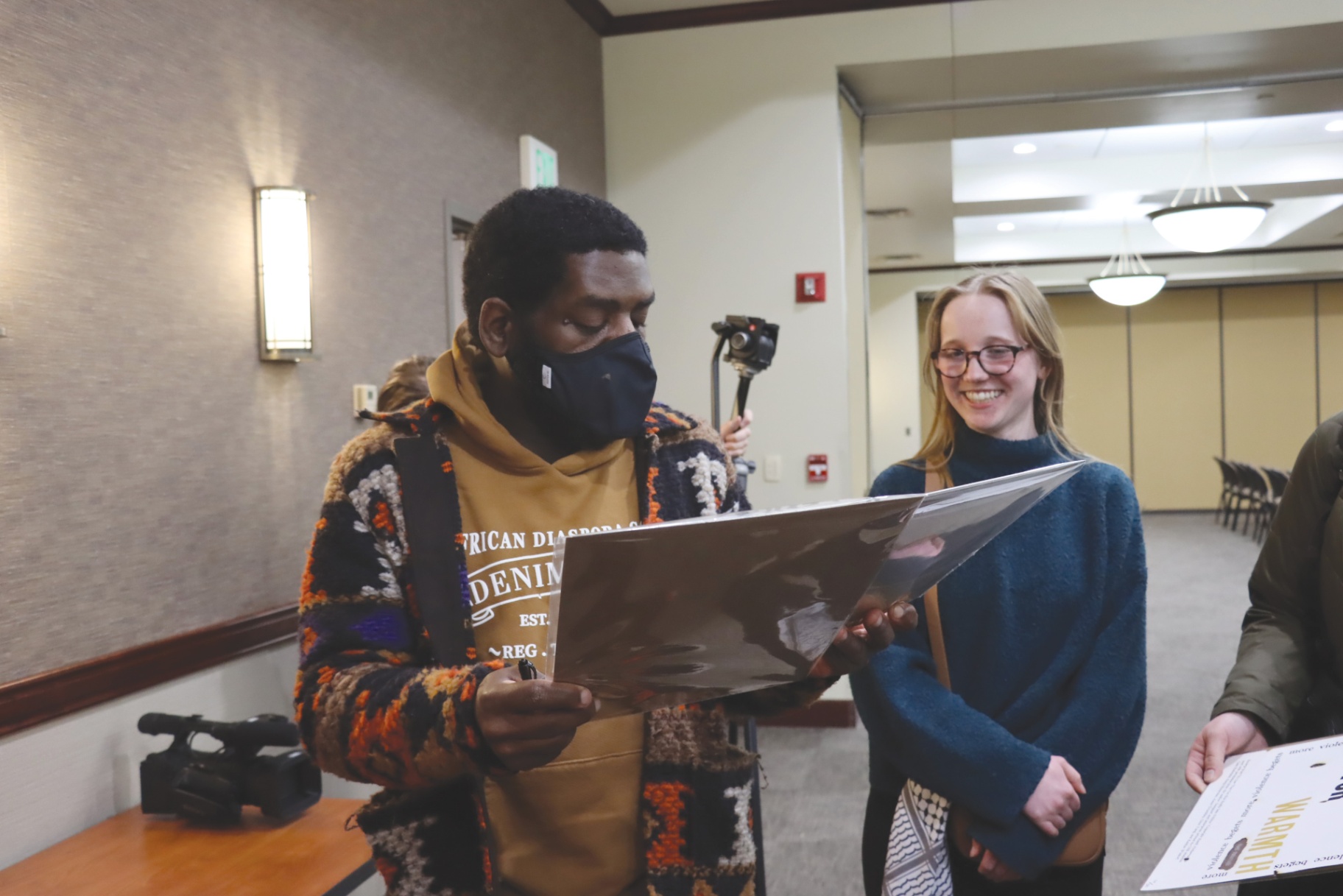
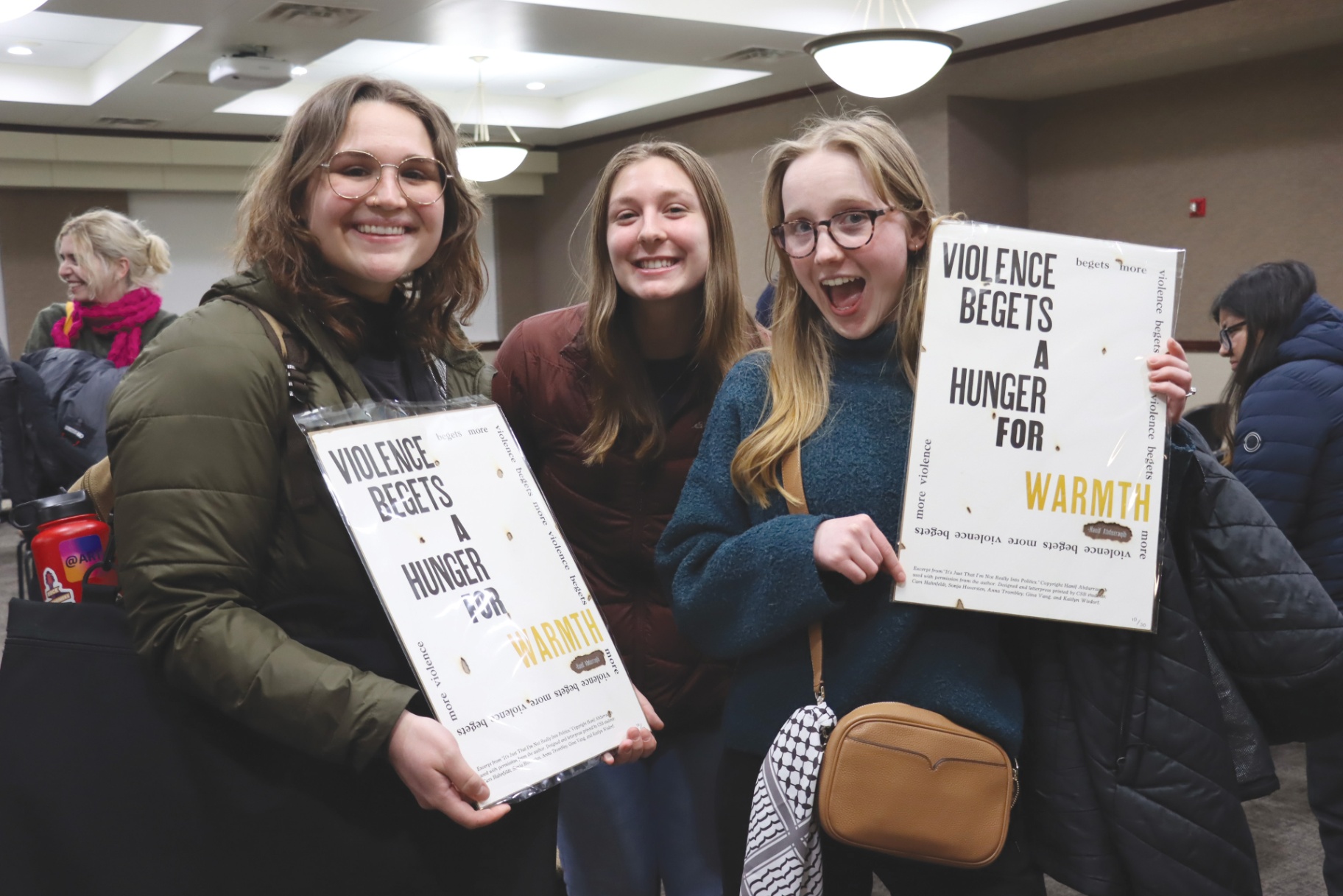
On Tuesday evening, the community gathered in upper Gorecki to hear from author Hanif Abdurraqib as he shared insights, advice and his own lived experiences.
Abdurraqib is a poet, essayist and cultural critic from Columbus, Ohio. During the evening, he shared his interests in music that are featured in many of his pieces, often addressing themes of race, class and the politics of the present moment.
During the event, Abdurraqib read aloud some of his poems and a few chapters from one of his books. He spent the last half hour taking questions from the audience, asking each individual their name and responding with his own experiences and advice.
“I don’t want to rob people of that opportunity to see the world or something they love in a new or different way,” Abdurraqib said. “I tend to think that if we explain a lot, the critic or anyone, I don’t think we want to ruin the exuberance that comes with stumbling upon something with new eyes and ears, creating new emotional wiring.”
As a philosophy major at CSB+SJU, Bangaly Kaba expressed the importance of keeping in mind the various lenses that readers look through when analyzing literary pieces. Though not an English major himself, Kaba felt that Abdurraqib’s message was still very applicable to his studies and future endeavors.
“I thought it was cool the way that he juxtaposed talking about the silence of the moments of watching the airplane, as well as him experiencing the Ohio streets,” Kaba said. “The way that he staged that through his reading is how I think too, so it was interesting hearing from somebody else who contextualized his story in the same way.”
English majors at CSB+SJU, Lizzy Weitzel and Katherine Jasinski had the opportunity to visit with Abdurraqib during class earlier in the afternoon, alongside attending the evening’s event.
“I thought the way that he talked about place was interesting because that’s also something that I’m considering for my capstone, and the idea of place as not necessarily a physical place, but more of an emotional place,” Weitzel said. “He talked about how you can write about a very specific place, but it can still be universal because of the stories that happen within that place.”
Both Weitzel and Jasinski expressed their appreciation to hear and learn from Abdurraqib, to explore new approaches to writing and to hear advice about working through writer’s block—when writers feel that they have become stuck and do not know how to move on further with a piece.
“Especially as English majors who are doing Capstone, there’s this pressure that is has to be perfect, it has to be polished and it has to be poised,” Jasinski said. “When in reality it doesn’t have to be the best thing I’ve ever written, but it just has to be something I’m passionate about and something I’m working towards and I can finish it more outside of college.”
Abdurraqib shared his attachment to the Midwest, reflected in many of his pieces reflecting his family and upbringing. Kaba, Weitzel and Jasinski shared a communal appreciation for Abdurraqib and his heartfelt and inspiring work.
One of the poems he read, titled “Too Far to Stop, Too Fly to Go Back,” outlined nostalgia and the memory of his grandmother. Tied to his sentiment towards running when he would run so far that he couldn’t turn back around, he reflected a similar notion towards the nature of memory.
“I let her tell me about her day as if it was also my day, and I let her dance to her song which becomes our song,” Abdurraqib said. “I promise if you crawl back towards memory enough, it might make a victim of you too.”