Family and (dis)functionality: timeless stories in our time
As November gets underway, and particularly it being Indigenous Heritage Month, I wanted to share a few of my favorite novels/poetry by indigenous authors that
As November gets underway, and particularly it being Indigenous Heritage Month, I wanted to share a few of my favorite novels/poetry by indigenous authors that I’ve read over the past few months. So, in honor of the colder weather, sit back, drink some tea and pick up a book (or three).
“The Mighty Red” by Louise Erdrich
Released in October (and, if I may add, the stunning book club pick for the Indigenous Student Association this fall), “The Mighty Red” by Louise Erdrich sets itself in the Red River Valley of North Dakota during the 2008 financial crisis. Herein lies Kismet Poe; an apostate of goth ideals, honorary member of her town’s book club and currently being pursued by two boys.
One of them which she accidentally marries.
Or, well, that’s a mystery, and so is the survival of those working the beet farms. And adjacent to that is a multi-student-football-team-death mystery; mind you, this is in addition to the disappearance of key characters and a love of sandwiches. But all those pieces connect, for the book at its core is a love letter to messy, dysfunctional families.
Erdrich situates this story through two means; one, the financial crisis of 2008 crippling small-town farmers and their usage of pesticides rendering the soil inhospitable. Reminiscent of the Dust Bowl, in some ways, as both situations are man-made, the undercurrent speaks of the belief of doing good. The belief of familial cohesion even as some characters voices are not overheard.
Secondly, Erdrich looks directly at Crystal, Kismet’s mother and beet sugar driver. It’s a strange dance the two do, but isn’t that akin to real life? The push and pull of mother/daughter one can almost memorize as dance steps through life. Crystal doesn’t wish for Kismet to be married, but even as she struggles with it, she accepts it; oh, not nicely, no, as multiple times she wishes to have stopped the wedding.
But Crystal shows an acceptance that she’ll do whatever Kismet needs of her, including the chance to make bad decisions. It’s autonomy in one of its messiest forms, but also one of its most trusting.
“I Was a Teenage Slasher” by Stephen Jones
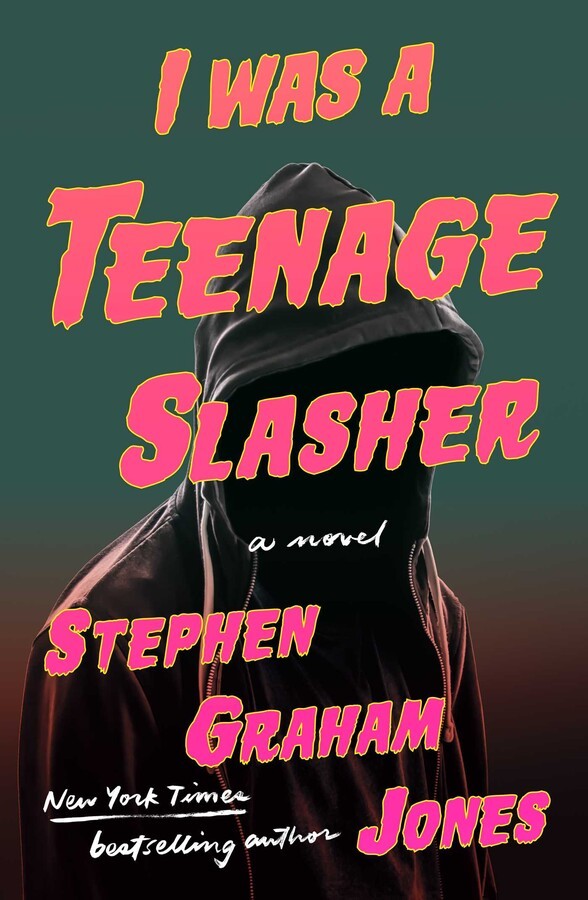
Published in July, “I Was a Teenage Slasher” by Stephen Graham Jones twists the slasher film trope on its head (possibly literally, heads are rolling). Following best friends Tolly and Amber, the book is introspective of itself; the main character tells their story knowing the outcome, which in turn asks questions about the control they have on their body.
But let’s back up. The slasher flicks are based on the idea of a character dying and coming back from the dead for revenge, with the sole purpose to kill those who killed them. A little eye-for-eye action coupled sometimes with a romance aspect that is (necromantic in essence? I’m not answering that) interesting, to say the least. Usually, it ends with the Final Girl, who kills the slasher.
But what happens when the Final Girl doesn’t want to kill the slasher? What happens when they fight for something which seems impossible?
Jones does an impeccable job of complicating a before uncomplicated aspect of slasher flicks, showing all the moving parts while also providing (dark) humor.
He works with the medium of slasher flicks as mass art and its importance to participate in conversation with (a little Jameson-esque, for all my literature theory friends out there) while not pushing ideas onto the audience. He merely spotlights them for us to view.
“Removal Acts” by Erin Lynch
Combining poetry and multimedia through the landscape and malleable identity of herself, “Removal Acts” by Erin Lynch follows the narrator as she come to realize her cultural identity. Published in 2023 through Gray Wolf press (a Minnesota based publishing house), the poem follows a narrative structure of her emotions and responses to learning of her indigenous family heritage; nestled between the poems are pictures, blackouts and blank lines to incorporate the unwritable conversation between her and her family.
One piece which strikes me particularly is her conversation on language: “I am doing my best/with the online lexicon/feels wrong to even place/the title of this poem/in Dakota.” Beyond the hollowness of her lexicon in Dakota (titled “IWÓBLU”), the poem tries to convey what is lost beyond the language – namely any feeling of community which he comes from.
The narrator must trust herself in her positioning of cultural heritage and generation pain which she learns. But beyond the pain is also the joy of slowly finding herself.
This idea of joy ties into all the stories, no matter with Erdrich, Jones or Lynch; it is a conscious choice to get up every morning and survive in the Red River Valley, to fight against the slasher, and to have joy that your ancestors hoped for you to have. These stories also aim to show joy in indigenous communities, beyond the pain and stereotypes many media sources have (and some still do) use as a profit for themselves.
These stories put indigenous people at the forefront with their sorrow and joy and simply being, and for Native American Heritage month and beyond, that is a powerful act of resistance.