Students compete for $500 in entrepreneurial event
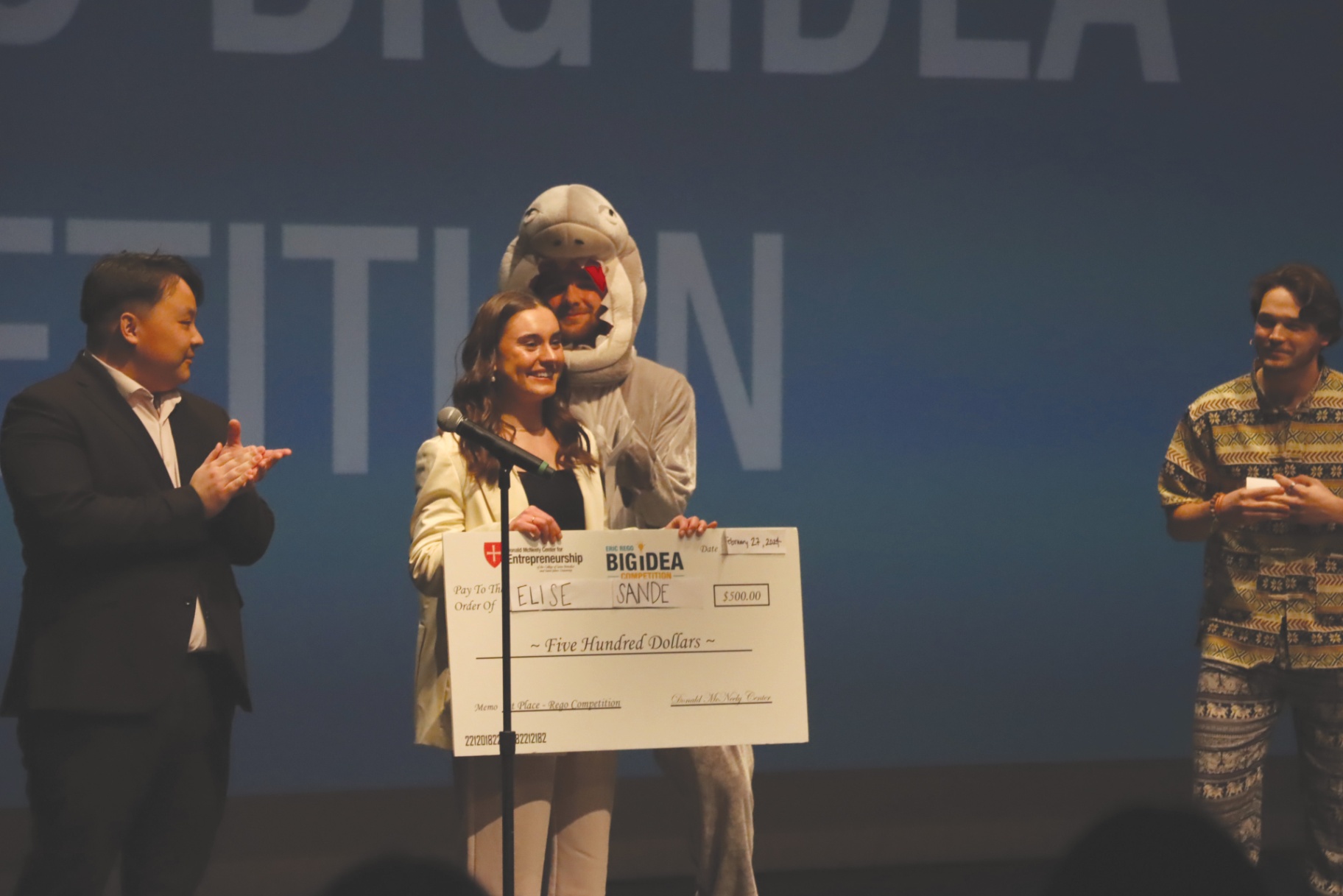
Ten students competed in a business and entrepreneurial competition to determine who had the best innovation. The students displayed their products in front of four panelists and an audience. Elise Sande, Alex Vang and T'nya Butler won 1st, 2nd and 3rd place.
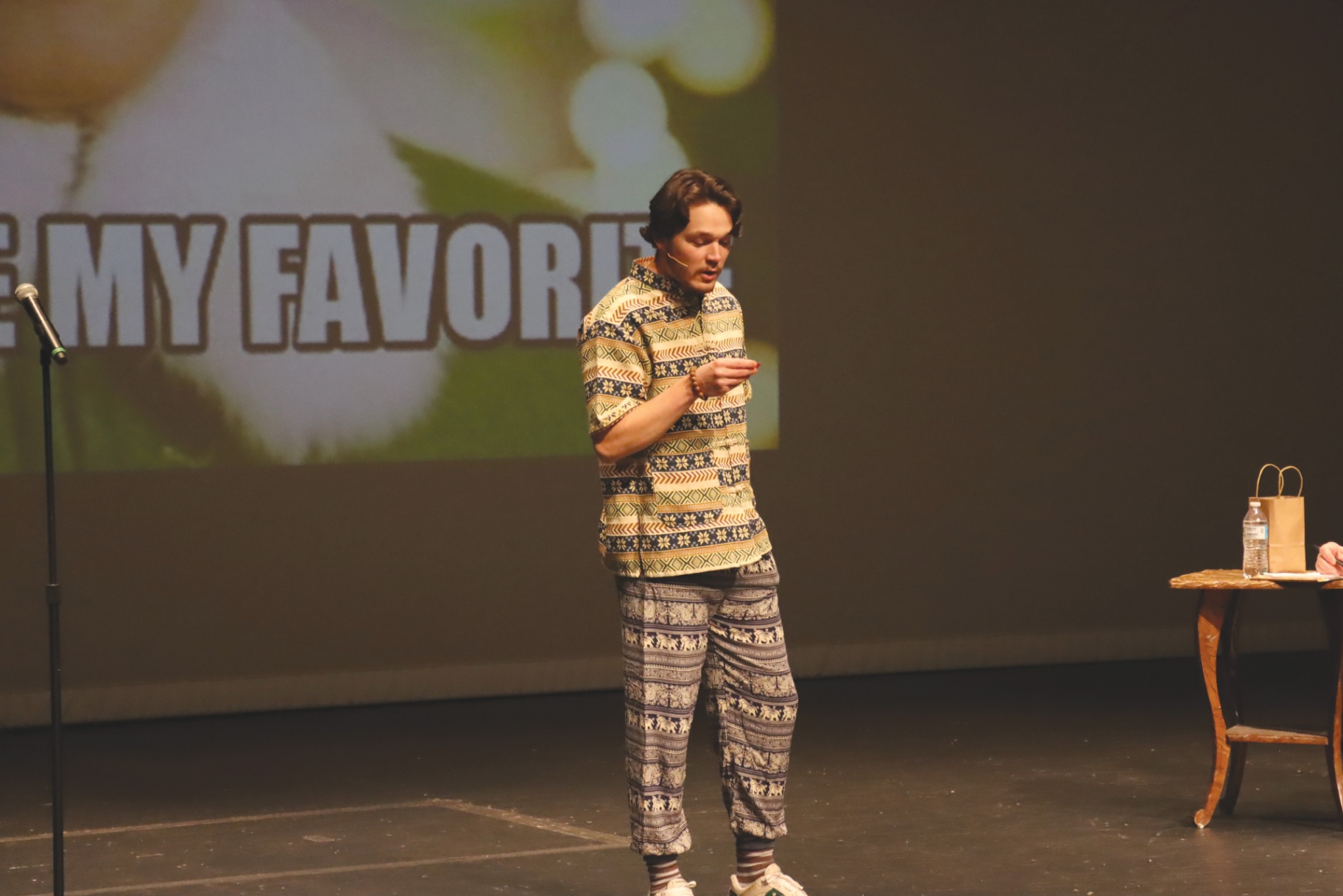
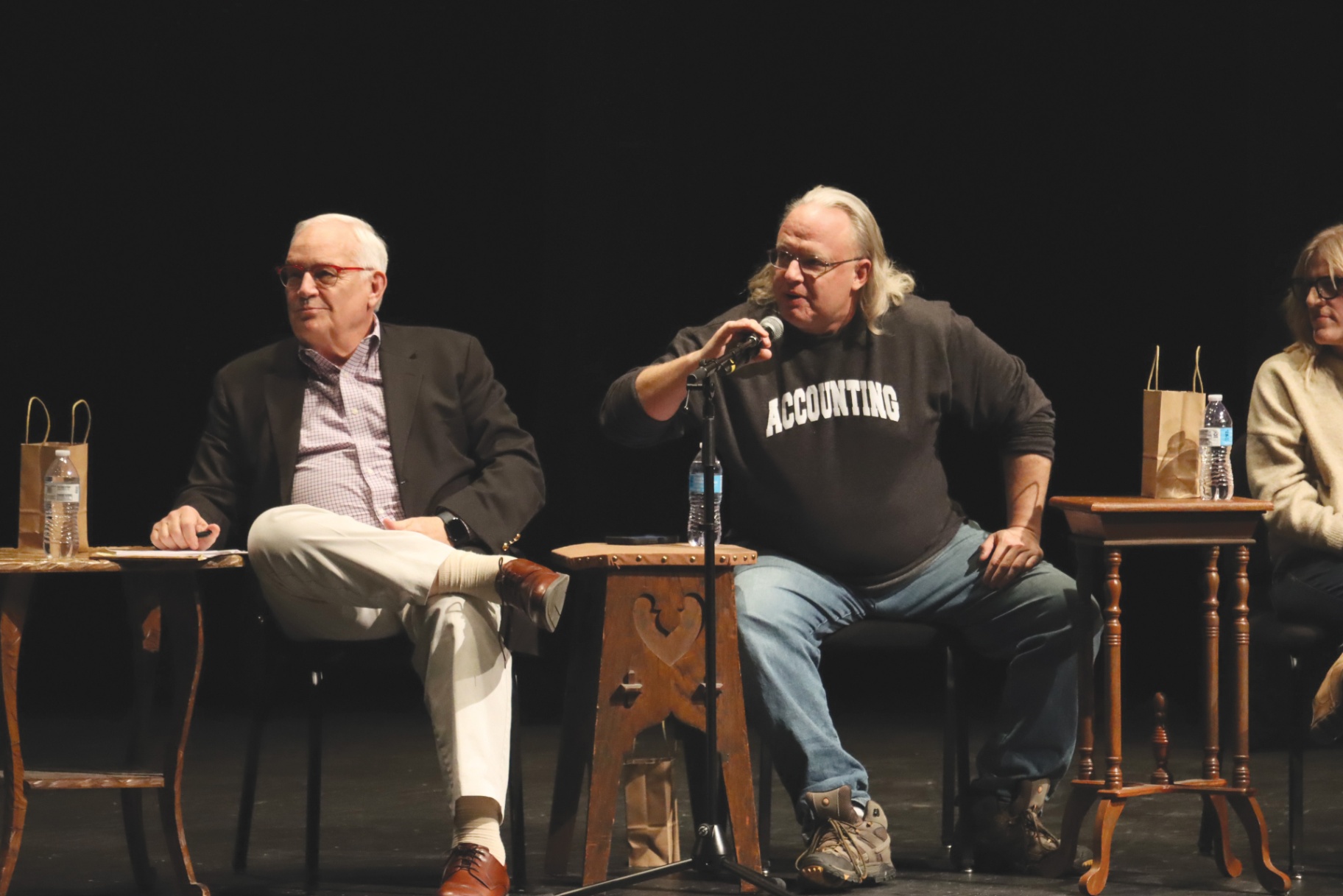
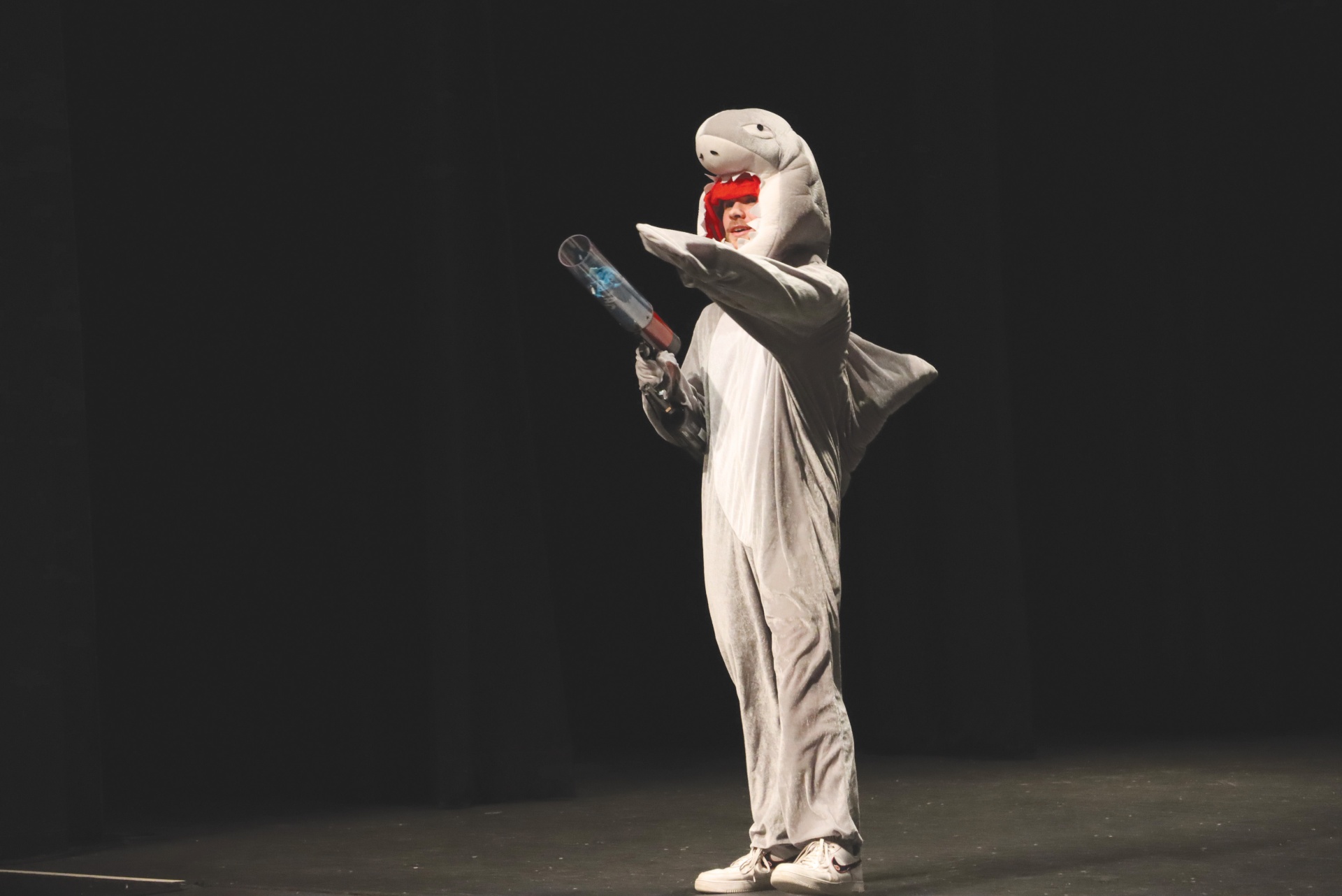
On Tuesday evening, 10 students took the stage at the Gorecki Family Theater to wow the crowd with a business pitch and vie for one of the cash prizes awarded to the top three entrepreneurs.
The event marked the annual Eric Rego Big Idea Competition, established in 2009 in memory of Eric Rego. Rego was a 2006 SJU graduate and member of the first cohort of Entrepreneur Scholars who passed away in 2008. The competition provides a platform for students of any major to pitch a business venture that they are passionate about and build confidence in their ideas and public speaking skills.
CSB senior Elise Sande won the first-place $500 prize for her creation of Closet Couture, an app which uses AI to help generate outfits from the items in your wardrobe.
SJU first-year Alex Vang took second, bringing home $300, and CSB sophomore T’nya Butler took third, winning $200.
The students, selected as finalists out of a larger pool of entrants, had 90 seconds to showcase their ideas in front of the crowd and convince the judges that their idea was worth the judge’s investment.
First, students submit a 30-second video pitch of their venture to be reviewed by a group of CSB+SJU E-Scholar alums. Guidelines for the venture are unconfined and, per the name of the competition, applicants are encouraged to dream big.
Over 100 students submitted pitches, and the 10 selected finalists proposed their ideas on the big stage.
The evening featured a vast array of business ventures, from a late-night campus food truck pitched by first-year Hannah Roach to ColdREM, a venture by sophomore Caden Caligiuri.
Many students were inspired to enter the competition by Paul Marsnik, a professor of global business and the founder of the E-Scholars program at CSB+SJU. They used foundational elements of entrepreneurship in their pitches, including addressing the target market, discussing the price of the product and profit margin and emphasizing buzzwords and taglines to successfully sell their products. Besides drawing on their class experiences, practice was the name of the game.
“I think practice was at the center of everything I did. All the credit to anyone and everyone who would listen to my raw pitch; I definitely couldn’t have gotten up on stage if it wasn’t for friends taking time out of their day to listen to me ramble about my product,” Caligiuri said via email.
Bob Foster, Boz Bostrom, Mary Bruno and Amanda Urbanski were panelists, while the judges included students, event sponsors, alumni and friends of the Donald McNeely Center.
After all the finalists gave their pitch, the judges deliberated over the top three entrepreneurs, who would advance to a question-and-answer session with the panelists and compete one final time to seal their deal. During the break, five selected audience members had an opportunity to flex their own impromptu sales skills, giving a 30-second pitch on the fly for a randomly chosen product in hopes of winning $100.
Products included a drivable umbrella, invisible paint and a sound-proof baby crib. Vang, Butler and Sande were the three finalists selected for the final round of the competition.
The contestants engaged in a five-minute Q-and-A about their ventures. Vang fielded questions about Language Lenses, a pair of sunglasses that allows users to communicate despite language barriers with the help of visual and audio translation. Butler answered questions about T-Tods, a product that keeps socks and their mates together in the wash.
Though none of the products were real, contestants spoke like they were standing before a real panel of investors, discussing product development, marketing and how much share they would give to investors.
In her acceptance speech, Sande expressed gratitude for the opportunity and recognition of the fellow contestants and all the great ideas in the room. Borrowing from the title of the event, Sande shared the valuable lesson she learned from the experience.
“Keep generating big ideas, and keep dreaming big dreams,” Sande said.
Regardless of their outcome, other contestants praised the competition experience.
“I loved the competition, and it definitely makes me better as a person and businessman to be thrown into the fire with other great competitors,” Caligiuri said. “Although I didn’t get the outcome I felt I could achieve, the experience helped me with a lot of growth… I definitely urge others to get their ideas in next year.”
Though the event was a competition, community was at the heart of it for many contestants.
“The Big Idea Competition was truly such an amazing experience I will never forget. All the contestants were super supportive of each other, and I was feeling a sense of community,” Roach said via email.
“Every contestant had a great idea and pitch, and it was inspiring to be surrounded by so many talented people,” Sande said. “The experience taught me to step out of my comfort zone and to unapologetically believe in big ideas.”