
St. John’s Fire Department: a campus lifeline
The St. John’s Fire Department played an instrumental role in extinguishing a large-scale fire along I-94 in early March. The department is a unique and relatively unknown fixture of the St. John’s ecosystem, keeping students, faculty and monastic community members safe from fire and medical emergencies. The campus fire department employs 11 student firefighters.
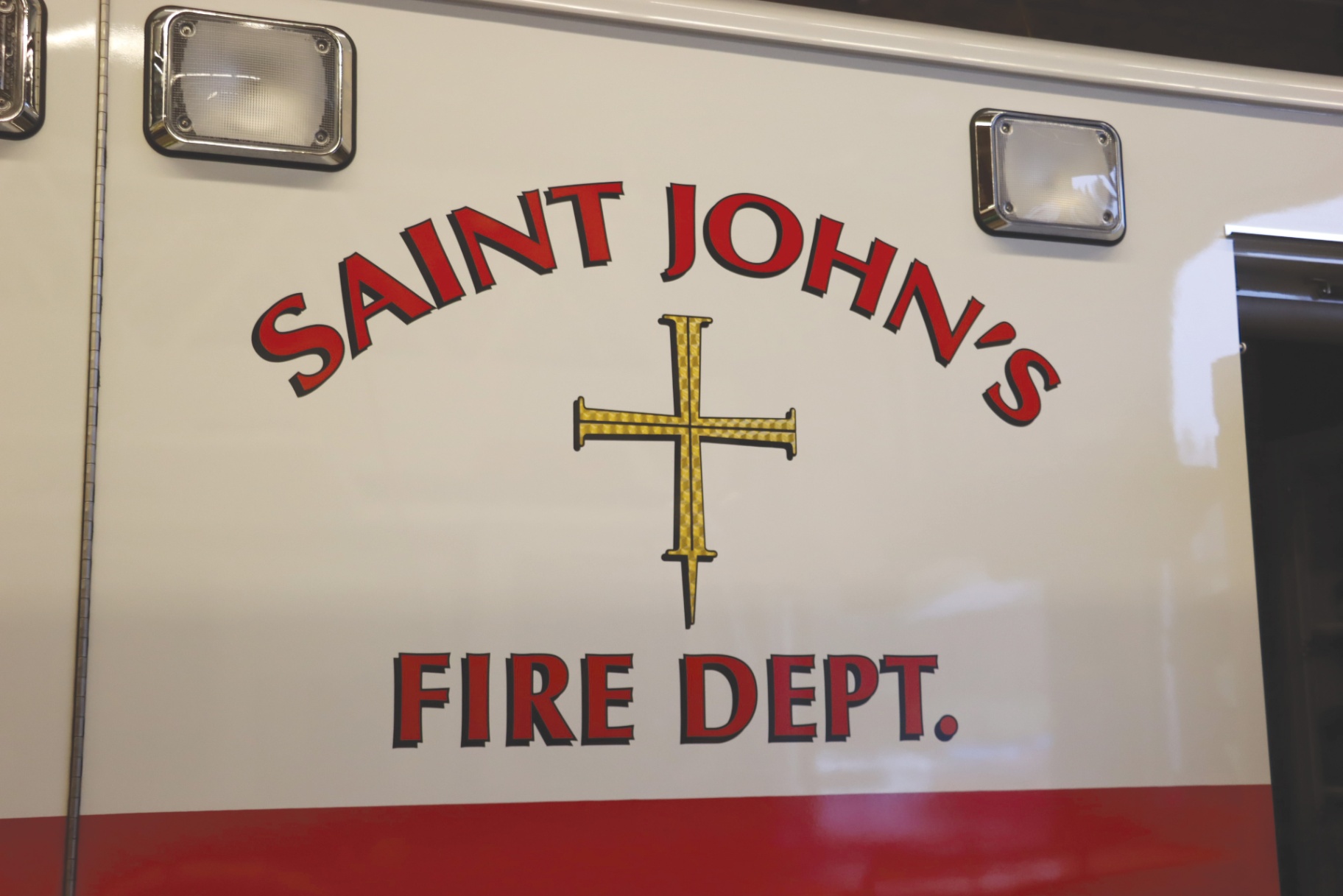
As black smoke billowed from Hul Bros. Trucking last month, fire trucks sped back and forth between the scene and St. John’s University. In the Flynntown parking lot, they were met by monastic and student firefighters who refilled tankers so the trucks could continue quenching the flames.
The incident served as a reminder of one of the most unique yet essential behind-the-scenes teams on campus: the St. John’s Fire Department.
The department, which consists of SJU monks and current SJU students, protects over 50 buildings and sites spread across a 2,400-acre campus. First response personnel on campus—including Life Safety, the SJU EMT Squad and the St. John’s Fire Department —work closely together to ensure the safety of the community. “When you think of our community, we aren’t just a college campus. We have a high school, a monastery and a parish community praying each weekend. We have big events that bring in thousands of people, so we are really open to any medical or fire event you can imagine,” fire captain Rev. Nick Kleespie said. “We have the potential of responding with both Life Safety and our EMT Squad, who are really valuable and important partners on the medical side of things.”
The St. John’s Fire Department was established as a monastic fire department in 1939. The geographic location of Collegeville, away from neighboring towns like St. Joseph or Avon, made it essential that St. John’s was equipped to respond to fires at rapid speed.
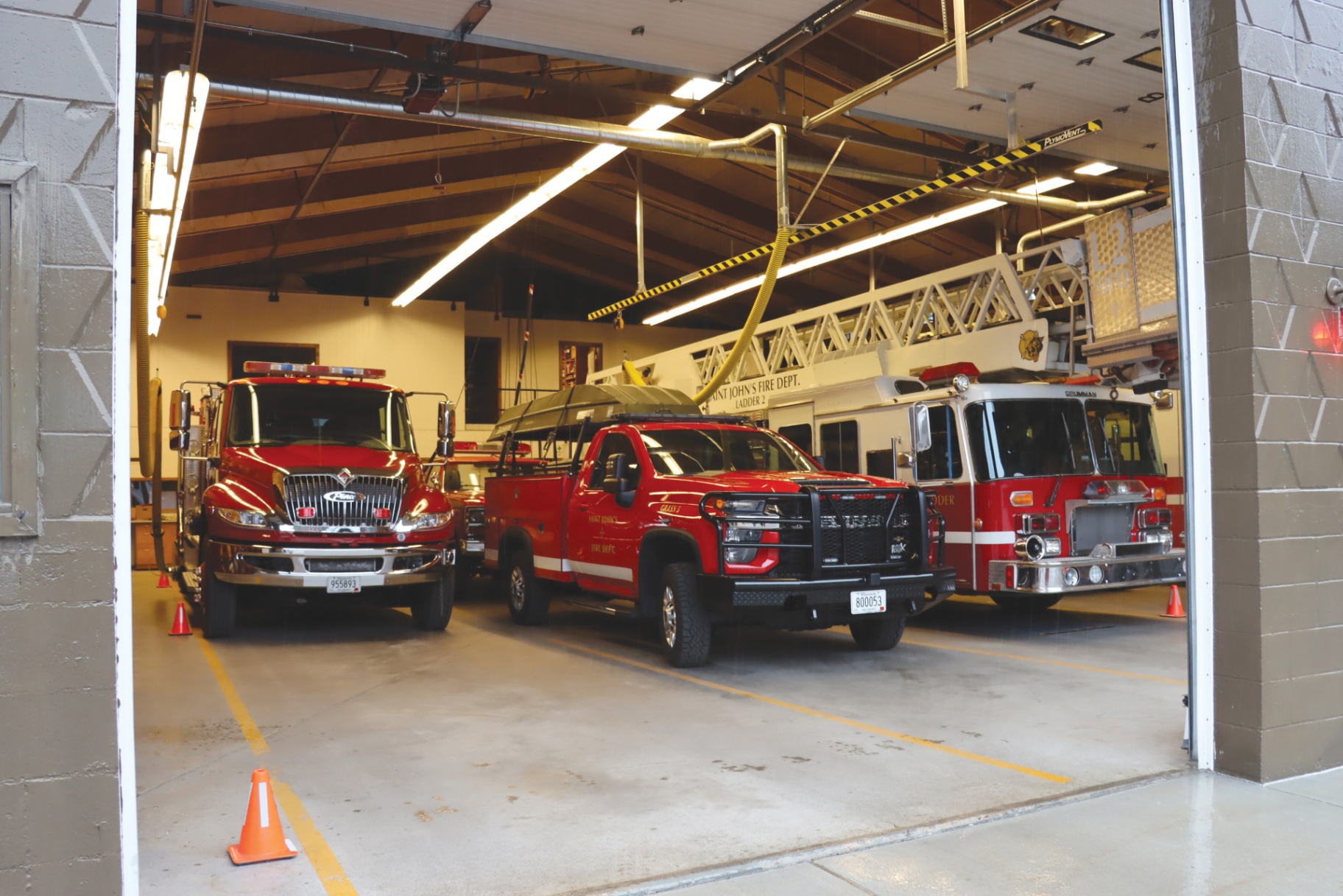
For many years, every monk who joined the monastery was expected to spend some time serving within the department. It wasn’t until the late 1990s that the department gradually expanded to include students and a non-monastic fire chief. The head of the St. John’s Fire Department, Andrew Smith, is the third layperson to serve as chief. Operation Unlike most large-scale career fire departments, firefighters don’t live in the station. Instead, student firefighters are required to live on upper campus in close proximity to the fire station. The station, located behind Guild Hall, houses two fire engines, a grass rig for forest fires and a 102-foot ladder truck used to gain elevation or roof access.
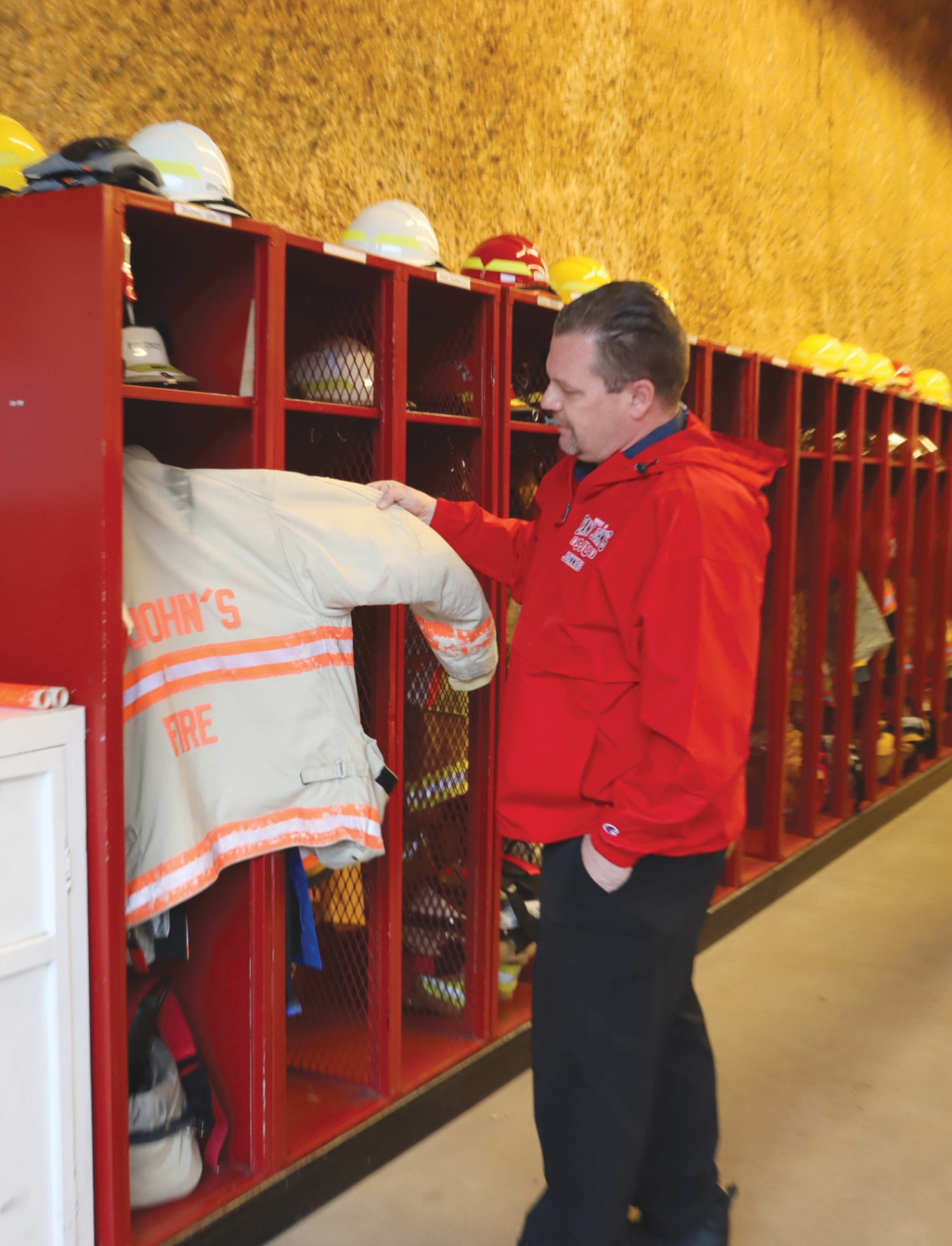
Incoming calls for assistance begin with Life Safety, which dispatches them to the correct emergency response team. Firefighters are on call 24/7 and carry pagers that notify them when a call comes in. When a pager goes off, firefighters run to the station and suit up in turnout gear.
Every firefighter gets every page, and they can choose to respond if available. If it turns out to be something more serious than a simple smoke alarm, a second page is issued. Firefighters also work periodically assigned weekends from Friday at 5 p.m. to Sunday at 5 p.m. where they respond to every call. Although the St. John’s Fire Department operates in the same manner and capacity as any other fire department, most pages are for medical calls and smoke alarms.
“The majority of our calls really are responding to a lot of burnt food,” Kleespie said. “I’ve been on the department for 15 years now, and we’ve only had one major structure fire on campus. We’ve had a number of car and grass fires, but we always have to be trained and ready to respond to that bigger thing, if and when it does happen.”
Kleespie estimates that the department’s calls are split 50/50 between medical and fire. “Sometimes I don’t think we get the respect we deserve because people think we only respond to smoke alarms. That’s just not the case,” assistant firefighter and SJU sophomore Mac Franklin said. “We’re trained to the same level of a firefighter that would come to your house. We aren’t responding to burning buildings every day, but we’re doing a lot of stuff people don’t want to do. We train all the time and respond to these calls at two or three in the morning when you’re asleep. People tend to overlook that.”
Andrew Kowalski, fire captain and SJU junior, noted that medical calls can often involve drunk and disorderly students and the department can “be involved in that negative rap” when dealing with intoxicated individuals.
“Sometimes we respond to calls when people make poor choices. But, again, we’re not here to judge people. I’m here to help you,” Smith said. “It might be a horrible day for you, and I want you to know that somebody’s here to support you.”
It’s rare for college campuses to have their own fire departments. In Kleespie’s view, it makes the St. John’s Fire Department all the better. “We know our students best. We know this community; we protect its buildings and its people and its land,” Kleespie said. “Not simply just because it’s our job, but because we feel it is our duty and our calling to do so.”
Training The department typically hires four students from each class, rounding out the roster to an even 16. There are currently 11 student firefighters.
Students arrive at the department through different channels. “There’s usually some nugget of interest—maybe they have a family member who’s a firefighter or they studied to be an EMT in high school. Maybe they had no interest and just simply found it on the campus job site,” Kleespie said. Either way, becoming a firefighter is a time commitment.
Training begins the first year at SJU. Trainees take Firefighter I and II with hazmat operations, standard courses for professional firefighters. Upon completion of Firefighter I, trainees can respond to calls.
“It’s a big investment in them in that first year, and it’s a big investment of their time. It’s not glamorous taking on an extra class. It’s not glamorous responding to calls. But it is a necessary part that prepares them then to be really great student firefighters on campus,” Kleespie said. An additional twice-monthly training session teaches firefighters new skills, including water and car rescues.
This past Saturday, firefighters gathered to simulate a car fire rescue. A junkyard car was lit on fire repeatedly as firefighters learned the best angles to put out the blaze, water flow and how to deal with combustible materials in the engine compartment. “Our student firefighters are trained to the exact same level as any other local fire department. They won’t often see fires, but they do have the training, which allows them to go out and apply anywhere else,” Kleespie said. Monastic Connection
Since its establishment 85 years ago, St. John’s Abbey has owned and operated the St. John’s Fire Department.
When Kleespie joined the monastery, working in the fire department was no longer compulsory. However, Kleespie sought out a position with the department after working on the SJU EMT squad.
Kleespie is a constant presence on campus—he’s the chaplain of the university, a faculty resident and a doctoral student. He joked that the fire department is a “beautiful interruption to all that.”
“Being present to people at some of their worst moments, I’m helping them when they need it. I think it’s a way of gifting this belief in the goodness of others and helping people when they are in need,” Kleespie said. “It’s an act of faith for me that I am able to be present to this community and serve it in this way.”
For Kleespie, the work of the St. John’s Fire Department is an essential arm of Benedictine tradition.
“The Rule of St. Benedict really focuses on caring for the tools and the gifts of our community,” Kleespie said. “What we do in our fire department, and what St. Benedict demands of us, is that we care for the things that we hold important to this community, and that’s our people, our land and our property.”
Mutual Aid The St. John’s Fire Department has a mutual aid partnership with neighboring communities in Stearns County, including St. Joseph, Avon, Cold Spring and Rockville. When a large disaster or fire occurs that exceeds local capabilities, emergency services agree to lend mutual aid outside of their typical boundaries. Last month, a fire at Huls Bros. Trucking, located just off the Collegeville exit along I-94, sent the St. John’s Fire Department into action. According to the Stearns County Sheriff’s Office, an employee reported seeing smoke come from one of the semi-trucks parked inside the shop and ran to get a fire extinguisher. By the time he returned, the fire was out of control. Nearby fire departments quickly arrived to the Flynntown parking lot, where the St. John’s Fire Department helped fill trucks with water. “We set up a tanker—basically a fire apparatus that stores a few thousand gallons of water—to keep the coastlines running,” assistant firefighter and SJU first-year Tate Nelson said. “When there’s no hydrants nearby a fire scene, we have to set up a station where tankers from Avon or St. Joseph could come through. We’d fill up them, send them off to the fire, they would dump the water and come back.” The fire was eventually extinguished, but the trucking company’s shop and eight semis were declared a total loss. However, the mutual aid provided by the department was instrumental in stopping the fire. “On the St. John’s Fire Department, all of us knew our role. We are always training, so everybody knew what they had to do,” Franklin said. “When you get a large-scale fire incident like this, with multiple departments on the same fire, things can get super hectic, but I think we did a great job. The way we handled it just shows that we are ready for anything.” Cooperation between the St. John’s Fire Department and municipal departments isn’t uncommon. It goes both ways–—depending on the size of the incident, St. John’s may have to rely on neighboring municipalities to help out. “If we weren’t up here, it would mean every fire alarm and every medical would require another department to come. It would take St. Joseph maybe 15 minutes to get here depending on traffic,” Nelson said. “We normally respond to medicals within a few minutes. It’s helpful for students who need medical care or stabilization right away. Fire-wise, 15 minutes could mean the building is lost or multiple fatalities.” The SJU Fire Department, alongside Life Safety and the SJU EMT Squad, serves as the first line of defense before other emergency services can arrive. “When time is of the essence, the least we can do is try to get something under control or get the proper resources to come here,” Smith said. “Overall response times are the biggest benefit. For the families of students sending your children away from home, I think it’s comforting that there’s people here that can help.” Futures in Firefighting Both Franklin and Nelson plan to continue firefighting in career departments after graduation.
“I want to do fire as a career. Ever since I got the taste of it, it was just something I was drawn to,” Nelson said. “Getting my four years was definitely part of that plan—it’s a lot easier to move up the ranks in city and career departments when you have that experience.”
Smith stressed the marketability of working on the St. John’s Fire Department. A highlight of his job is seeing young firefighters succeed. “If someone walks on here as a freshman and they complete the coursework—that’s four whole years they can say they had a job on a fire department,” Smith said. “It gives me the satisfaction of being able to mentor the younger students and give them career tips. If they ever get to the point where they want to go into fire service, I can help.”
Kowalski took the volunteer route instead. He found the St. John’s Fire Department after volunteering in his local fire department in Cromwell, Minn. As a nursing major, he hopes to gain additional medical experience and plans to return to firefighting after graduation.
“I think it gives us a really incredible opportunity to educate Johnnies in the fire service. They can go out and serve local communities when they leave St. John’s,” Kleespie said. “We have a lot of firefighter alumni who go off and serve small and big communities as professional or volunteer firefighters.”