Speaker from Minneapolis Federal Reserve talks tribal nations
The speaker discussed challenges facing the economic development of tribal nations.
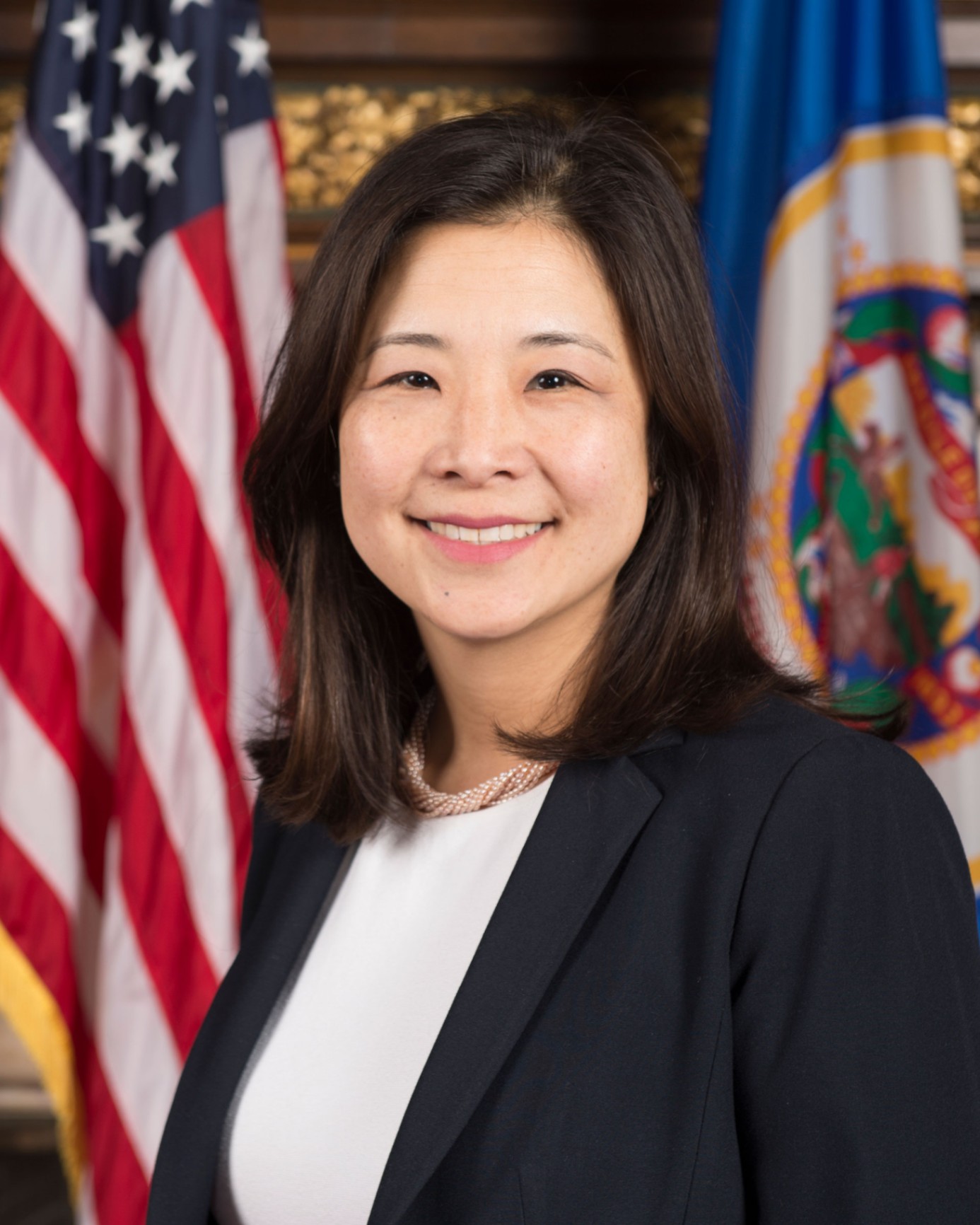
Last Thursday evening, CSB+SJU students and the public got the chance attend a talk about tribal nation economic development and the Minneapolis Federal Reserve.
Alene Tchourumoff, senior vice president of community development, and the Center for Indian Country Development was the keynote speaker at the event held in Upper Gorecki.
Sociology professor Ted Gordon interviewed Tchourumoff after a brief presentation of the Minneapolis Federal Reserve.
The event kicked off with Tchourumoff giving a presentation about the Minneapolis Federal Reserve and their role in the Midwest. The Minneapolis Federal Reserve serves Minnesota, North Dakota, South Dakota, Montana, Northwestern Wisconsin and the upper peninsula of Michigan.
Countless people associate the Federal Reserve with high interest rates. The Federal Reserve indeed oversees interest rates, but it was made clear in the presentation that the Federal Reserve is responsible for much more.
For example, the Community Reinvestment Act was established in 1977. This act addressed redlining and enforced equitable access to credit. The act also reaffirmed that banks must serve communities when they do their business.
After the brief introduction of what the Federal Reserve does, Tchourumoff discussed what the Center for Indian Country Development is and what the Federal Reserve does to help tribal nations.
The primary goal of the Center for Indian Country Development is to support the prosperity of Native nations and Indigenous communities through research and actionable data that will make important contributions to public policy. This program was created because Indigenous communities face disadvantages when it comes to economic stability and affordable housing. Employees for the program are knowledgeable and have talked to tribal leaders to see what can be done to help the groups improve economic conditions.
One of the biggest challenges facing Native American reservations is affordable housing. Houses are difficult to gain as collateral because there are extensive procedures complete. Another key contributor to this issue is that the land in reservations is held in a trust which makes it harder to get mortgage loans.
There is also an overall housing shortage in the nation. COVID-19 was an eye opener for many reservations. Tribal businesses were disproportionately affected by the Paycheck Protection Program and were not able to receive as much assistance compared to businesses off the reservation. It was made clear that the issues that Indigenous communities are face are multi-layered and efforts are being made to help the tribal nations.
Gordon expressed that he took a lot away from the event as the facilitator.
“My key takeaway is that the Federal Reserve does a lot of work that greatly benefits the public, including Native communities,” Gordon said.
Gordon also discussed some of the things he thinks goes unnoticed.
“One thing that often goes unnoticed is that the Federal Reserve is an incredible research institution, and they have access to all of this confidential data, because every bank in the United States has to work with the Federal Reserve,” Gordon said.
He also stressed a couple ideas that he wants everyone to take from this event.
“There are a lot of opportunities to work with the Federal Reserve, whether it be through working with indigenous communities, finance or public policy. There are a lot of things that indigenous communities do not have access to compared to non-indigenous communities, like affordable housing,” Gordon said.
Tchourumoff also wanted to leave a message for everyone about the Federal Reserve.
“The Federal Reserve is a resource open to all people and the door is always open. Anyone can stop by and get a tour if they wish,” Tchourumoff said.
For students who want to learn more and dive deeper into this field, a class is being offered. ENTR 101R, Indigenous Entrepreneurship, is a two-credit class and will take place in the CD module of this semester. The course will be taught by Gordon.