
New Abbey Woodshop dedicated
St. John's Abbey Woodworking is currently poised to take on the challenge of pipe organ building in the newly-constructed Abbey Woodshop facility.
Your bed, desk, bookshelves and chair all come from the same place. Coincidentally, so will some of the foremost pipe organs in the United States.
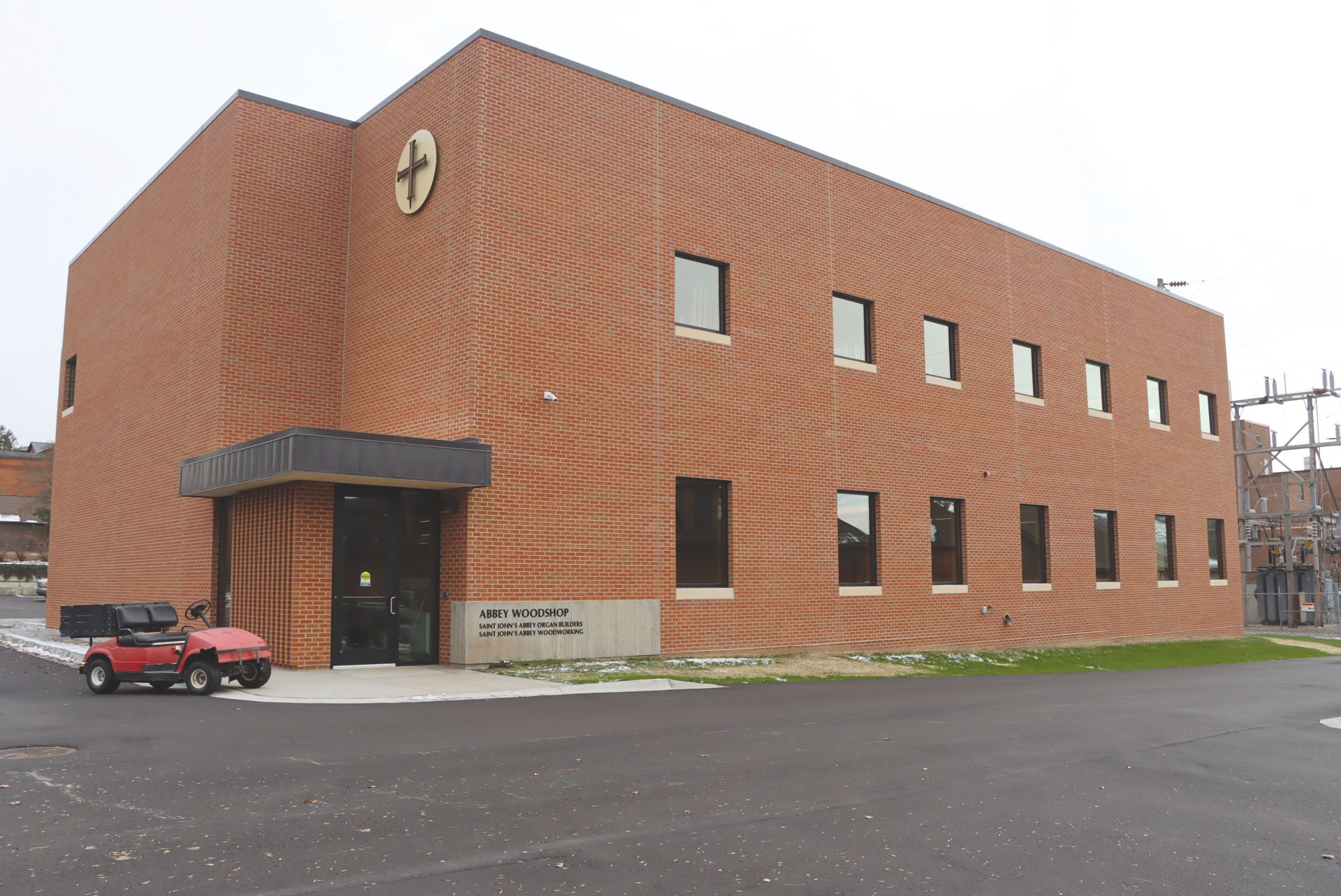
The St. John’s Abbey Woodshop, a brand-new 30,000 square-foot facility located behind St. Thomas Aquinas Hall, was officially dedicated on Oct. 17.
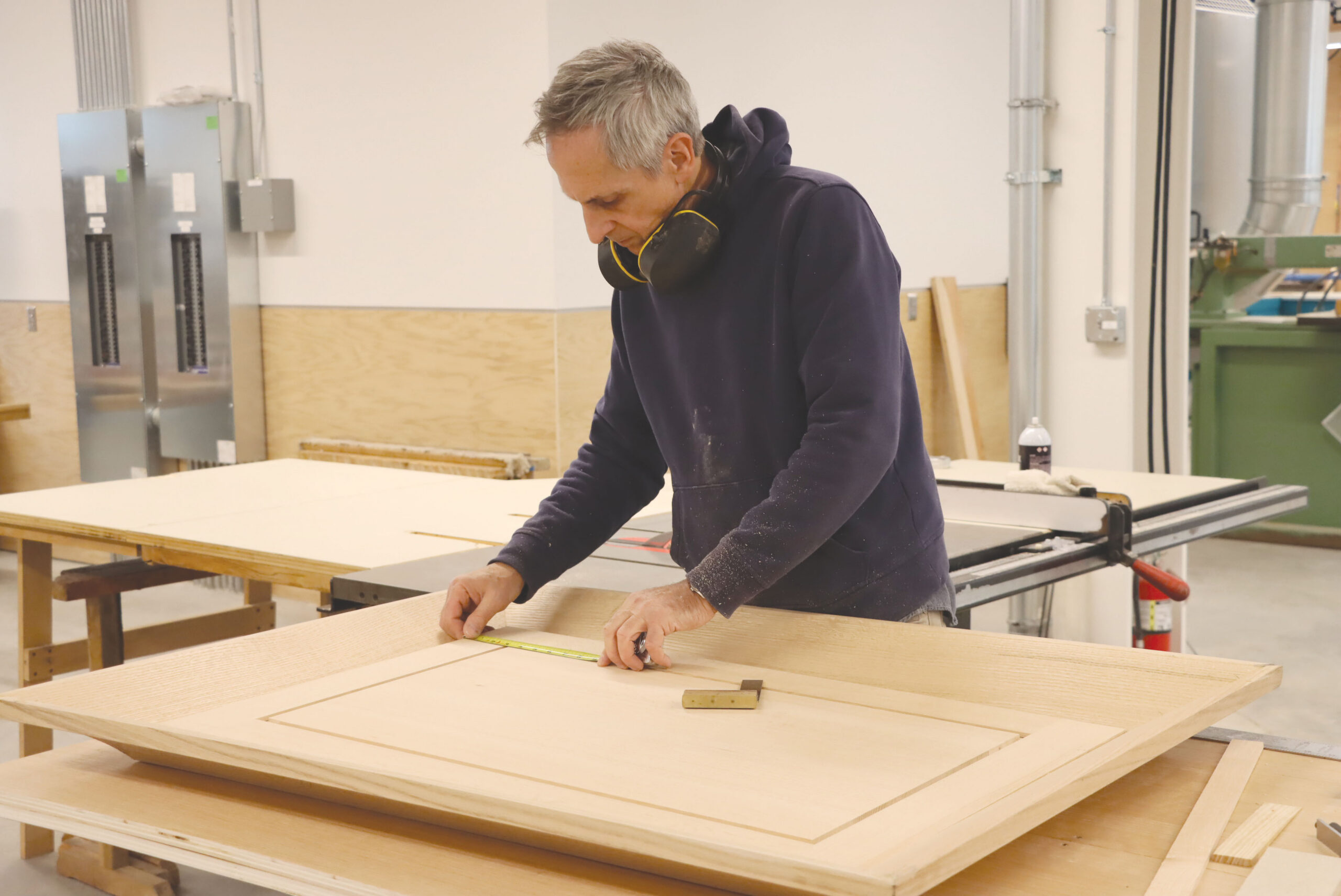
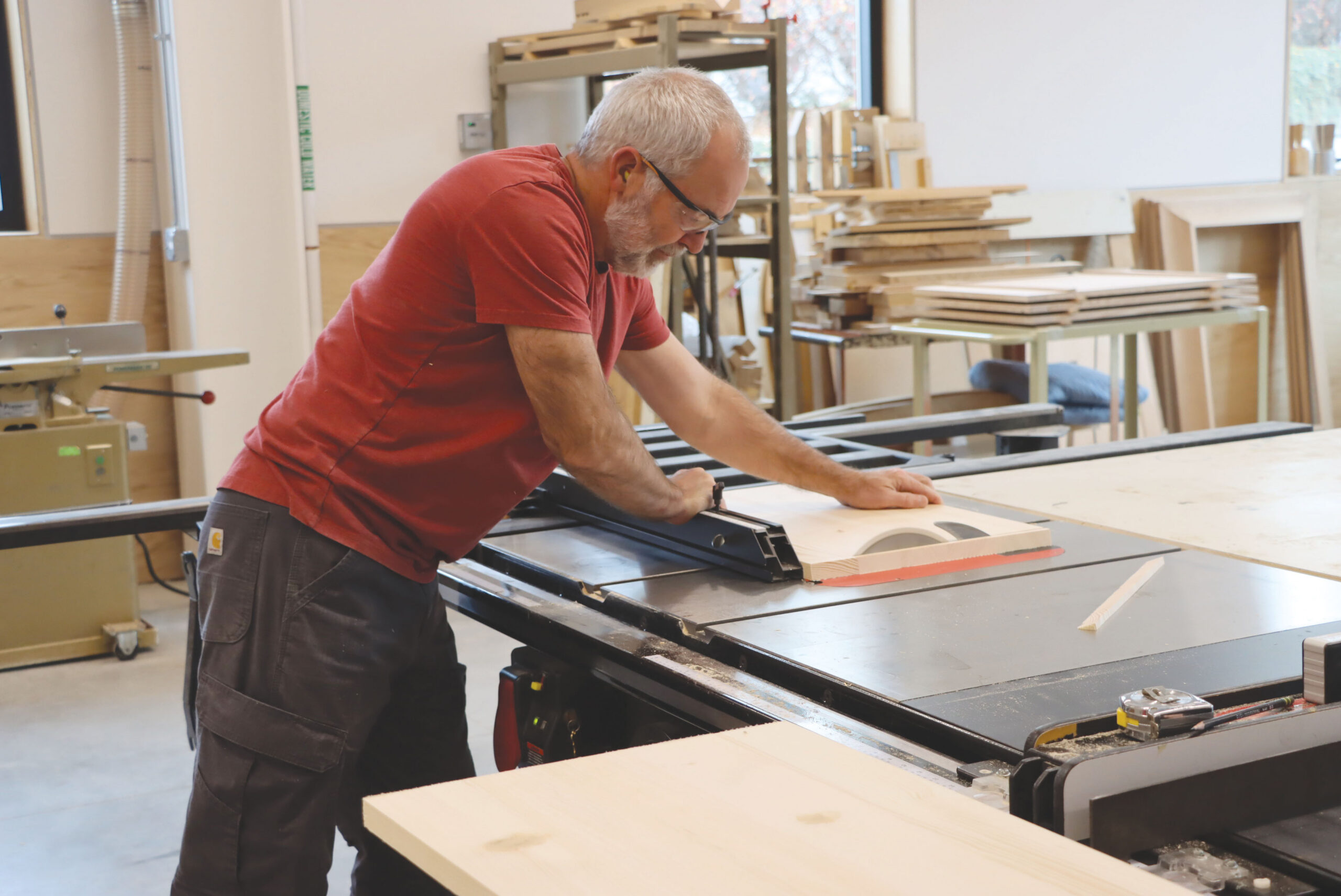
The woodshop has been a mainstay at St. John’s for decades, as it is tasked with producing furniture for campus facilities, funerary pieces for monastery members and loved ones and other special projects. Abbey Woodworking used to occupy several spaces across multiple buildings, which made it a challenge to efficiently complete projects, especially in the Minnesota winters.
“It’s incredible. There’s so much more room. The old shop was very small and crammed,” said SJU senior and summer woodshop employee Frank Doyle. “Trying to move any project around was an ordeal. There’s just so much new equipment in there.”
The expansion into a new facility not only gave the craftsman space to complete their projects under one roof, but it also allowed the St. John’s Abbey to take on a notable task—construction of larger-than-life pipe organs.
Collaboration with renowned organ builder Martin Pasi began when he arrived in Collegeville to install an expansion of the pipe organ in the Abbey Church. During his seven months on campus, Pasi got to know the campus community and decided to combine talents with Abbey Woodworking.
Lev. Lew Grobe, director of Abbey Woodworking, has been pushing for a new woodshop for the past six years. When Pasi approached him with the idea of building a place to teach the next generation of traditional organ builders in the U.S., Grobe was conflicted.
“When he told me that idea, I said, ‘Sit down until it goes away. We don’t do that. We don’t know anything about pipe organs,’” Grobe said. “But the more people talked to me, the more they said that this is really a once-in-alifetime opportunity. He is offering to pass on this tradition that he’s worked to build up and to train the next generation.”
The project, titled The Work of Our Hands, began construction in 2022. It cost an estimated $12.3 million to complete. The new space will house the Abbey organ builders, woodworking and Abbey artisans.
“It’s kind of on par with the entrepreneurial spirit of the St. John’s Bible, Minnesota Public Radio or the Hill Museum and Manuscript Library,” Grobe said. “It’s not all monks doing this by any means, but maybe we see ourselves a bit as incubators for these larger ideas to be realized.”
Organ building will be a focus in the new Abbey Woodshop, but the two-story building offers plenty of room for Abbey Woodworking to continue a variety of woodworking projects.
Dorm rooms at St. John’s are fully outfitted with signature red-oak furniture from the woodshop. The woodshop most recently completed an entire set for the New Seton townhomes.
“Whatever chairs you sit on when you do homework, the desks you’re doing homework on and the beds you go to sleep in, that was all made with Abbey Arboretum wood and crafted by the woodworkers in the Abbey woodshop,” Doyle said.
For Grobe, the full-circle manufacturing process is reminiscent of the Benedictine tradition of the dignity of work.
“I think it shows investment in continuing this tradition of manual labor craft. So many of the trades that were here on campus originally—the farms, the blacksmith shop, the cobbler—those things are gone,” Grobe said. “For us, [the Abbey Woodshop] says that we want to make an investment in this for the future. We think that it is important that it continues.”
Grobe hopes that the Abbey Woodshop will help extend the value of woodworking and manual labor to new audiences, which includes CSB+SJU students.
“The hope is that at some point in the future, we can integrate this more—not in a degree aspect, but give students the opportunity to come in,” Grobe said. “People come to liberal arts seeking an expansive kind of opportunity with all different faculties, and one of the things that is missing is the manual trades.”
Both Doyle and Grobe expressed excitement about the possibility of integration into coursework, like mathematics, art or environmental science.
“Maybe a mathematics course can come in and be tasked with trying to figure out the acoustics of the space, or that source of thing. Environmental science has been a big natural connector over the years. Maybe they can talk about regenerating oak in a sustainable way so that the next generations have trees that they can harvest,” Grobe said.
The new woodshop also opens a conversation about the future. Currently, there are four organ builders, five craftsmen and 12 regular volunteers. The first organ building apprentice is scheduled to start in January.
“As the monastery gets smaller, it’s natural to ask what our place is here,” Grobe said. “I think a project like this is really inspiring the monastery, and we hope it might attract men who are interested in religious life, but maybe don’t see themselves as a pastor or academic and really want to work with their hands. They have a place here as well.”
Since the dedication, the woodshop has begun operating in full swing. According to the St. John’s Abbey Woodshop website, more than 350 monks, sisters, workers, guests and benefactors gathered to witness the historic occasion.
“I lost a lot of sleep over this project, wondering if it was ever going to come together,” Grobe said. “To see all the people who have been involved and the willingness of people who are generous in their time and talents to something they believe in—it’s been kind of a dream until now.”