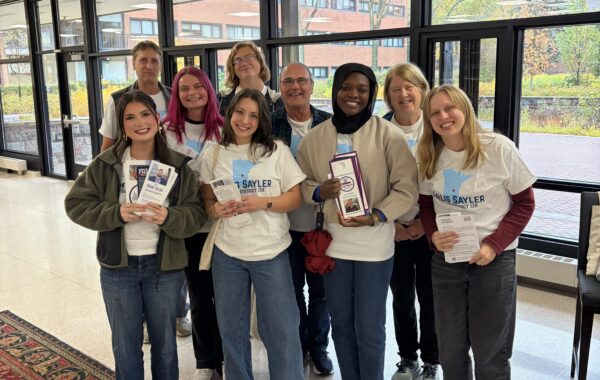
Multicultural Center hosts moderated discussions
Students shared personal stories and engaged in many group discussions.
Last Thursday, the CSB+SJU Multicultural Center hosted a moderated dialogue event on social isolation on college campuses in collaboration with Project Optimist, a Minnesota publication company that focuses on solution-focused news, local art and community conversation.
The event started with each student sharing in their groups about themselves. After that, Nora Hertel, Project Optimist founder and executive director, led the group in a hum to help ground everyone before the discussion began.
There were two groups of six that engaged in the conversations. Miel Aronson, CSB senior, moderated one group. She started her group’s discussion off with reading a conversation acknowledgment letter, reminding everyone that this event is a time for respecting others, hearing stories, sharing stories and most of all to learn about where social isolation is seen on college campuses.
Each group walked through a list of questions for people to discuss.In these discussions, private and vulnerable stories were shared on the topic of social isolation, community and connectedness. After a session in each group, the participants mixed together to reflection what stood out, surprised them or shifted their mind in the group conversations.
Once the reflection was over with the students, team members from Project Optimist moved toward synthesizing what was going on and sharing the big takeaways. The biggest themes they heard included the importance of authenticity, showing up as who you are, getting out in the world and building understanding and perspective. Another key factor was the intentionality of learning more about different cultures and identities. Some solutions they heard being discussed include various support systems at CSB+SJU through departments and organizations. Another solution includes exploring differences and recognizing that you do not need commonality for connection.
Community is a popular topic at CSB+SJU, and that was reflected in this discussion too, as the yearn for community was a common theme.
Aronson saw things from the moderating side.
“I got to see the side of what goes into creating that space for people to share, creating that structure,” Aronson said.
Each discussion was structured with a time limit to allow for equal sharing time.
“Setting time limits can feel restricting, but also it’s helpful to create that safe space where people have the time to share, and everybody gets the same amount,” Aronson said.
Aronson believed the event was a positive time to hear personal stories from others and what their experiences have been from a social isolation standpoint.
They hope this event could spark conversation about topics not often talked about.
There is hope that this event may have uplifted students to support others in their communities as who they are, rather than put people into boxes and hope they will conform into a certain stereotype.
“It’s hard to do that [discuss differences] when communities tell you that you’re not enough of one identity or another. Something that is important, that we saw in this event, is to value other people’s identities and their differences, their similarities, and validate who they are, even if you don’t agree on every term,” Aronson said.