Incentivized retirement plan unveiled, faculty critical
The provost has released an incentivized retirement plan in an effort to rightsize the faculty to the student body. Many have expressed disappointment in the plan's details, including the Faculty Compensation and Benefits Committee, who called the plan "inadequate."
As CSB and SJU explore ways to cut costs and programs, the schools are also looking to reduce the number of faculty.
Provost Richard Ice recently released details of an incentivized retirement program for tenured faculty members. So far, reception has been frosty: the Faculty Compensation and Benefits Committee (FCBC) did not endorse the program, and many faculty have expressed that the plan did not meet their expectations.
The retirement plan comes at the same time CSB+SJU is in the midst of an Academic Prioritization Plan (APP) looking at program closures, and the Boards of Trustees are slated to make the official decisions in late February. Administrators have said they need to increase the student-to-faculty ratio because enrollment has fallen below 1,500 students at each institution. Spring 2022 was the first time that CSB+SJU’s combined enrollment fell below 3,000 students since 1973.
Ice said he is aware of some faculty members’ criticism of the new incentivized retirement plan.
“I think that some faculty members are going to find that it’s personally adequate for them, and so in that regard, I think that it’s an individual decision. Some individuals are going to find it to be adequate and some are going to find it not to be adequate…It’s simply a difference of opinion,” Ice said, specifically responding to the FCBC’s characterization of the plan as inadequate. “I think it’s in the ballpark of what’s generous, and I’m trying to do the best that I can with the resources that we have.”
The plan includes 50% salary for one year, a split medical plan that has professors paying 50% of their medical premium for 36 months or until they are Medicare eligible and 100% of the life insurance premium. The enhanced retirement program is only available to tenured faculty whose combined age plus years of service at CSB+SJU equals at least 80. Only 39 faculty meet that bar of eligibility.
Faculty must apply to accept the plan by April 1. Those accepted into the program, contingent upon approval by the administration, are slated to retire at the end of the 2024 spring semester. The provost acknowledged that by opening up the program to all tenured professors, instead of targeting those whose departments are facing a faculty reduction, some who take the plan will need to be replaced anyway. But, he considers the action critical to ensuring fairness in the process.
“I thought it was important that we not target certain faculty, that everybody have the option to choose this program. I think that there are some ethical issues that if the institution is offering a program like this, it should be more widely open so that no one feels somebody’s getting a special treatment that others did not have,” he said.
The FCBC, the faculty committee that was allowed to provide feedback on the plan in the fall, wrote a letter to the entire faculty a week after the provost released the program.
“FCBC did not and does not endorse the Faculty Enhanced Retirement Program,” the letter said. “Our main arguments were that it was, and remains, inadequate in two ways. First, we feel that one-half-year of severance will not attract those who had not already intended to retire. Secondly, we feel that the medical benefit is insufficient.”
The FCBC also takes issue with other aspects of the plan, including wording that is different from the document that the committee reviewed in the fall, contractual language that would allow the administration to reject applicants and the fact that a significant amount of the half-salary would have to go towards paying the medical benefit.
Using CSB+SJU medical premium data from 2019-2020 for reference and taking into account a natural rise in costs, faculty on a typical plan (Core Plan A – employee plus spouse) would be responsible for devoting more than $9,000 of their half-year salary towards covering the medical benefit.
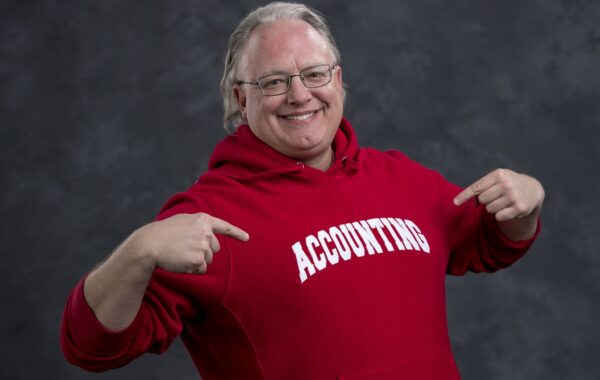
“My impression is that they offered what they believed would be useful but not too expensive,” FCBC Chair and accounting professor Steve Welch said. “There will probably be a few additional faculty that hold on this year that would have probably retired this year, and now they’ll retire next year because next year is when you get the retirement package. And there’ll be a few faculty that will retire next year that may have stayed on for two or three more years. My personal opinion is that it won’t be a significant enough number for the savings that they were hoping to get out of this, from an APP perspective.”
Several faculty, all of whom are eligible for the program and wished to remain anonymous due to the legal nature of the situation, expressed their disappointment with the plan and their intention not to take it. Even though they were speaking individually, many noted that they weren’t expecting a large number of eligible faculty to apply. However, as one professor pointed out, things may change between now and the April 1 deadline.
A professor who has already applied to take the plan is Tony Cunningham. The philosophy professor, who has been at CSB+SJU for 32 years, is doing so resentfully.
“I expected it to be simple, but it’s lengthy and complex, and I’m just a humble philosopher, not a lawyer. I’ve no real choice but to apply. Philosophy is to be cut in half, and I can’t destroy a young colleague’s career by hanging around. But neither can I walk away with nothing, so I’m stuck. I didn’t plan on one year of employment, but life throws curveballs,” Cunningham said via email. “I’ve had a great run, many years with wonderful students and colleagues. I’m terribly disappointed, but also grateful for what I’ve had. I wish surviving colleagues well. I hope the ship can be brought safely to shore.”