Abbey Woodworking furnishes St. John’s campus
St. John's Abbey Woodworking recently moved to a new building. It is a historical program in the St. John's community and is responsible for furniture and wooden creations across the entirety of St. John's campus as well as the greater CSB+SJU community.
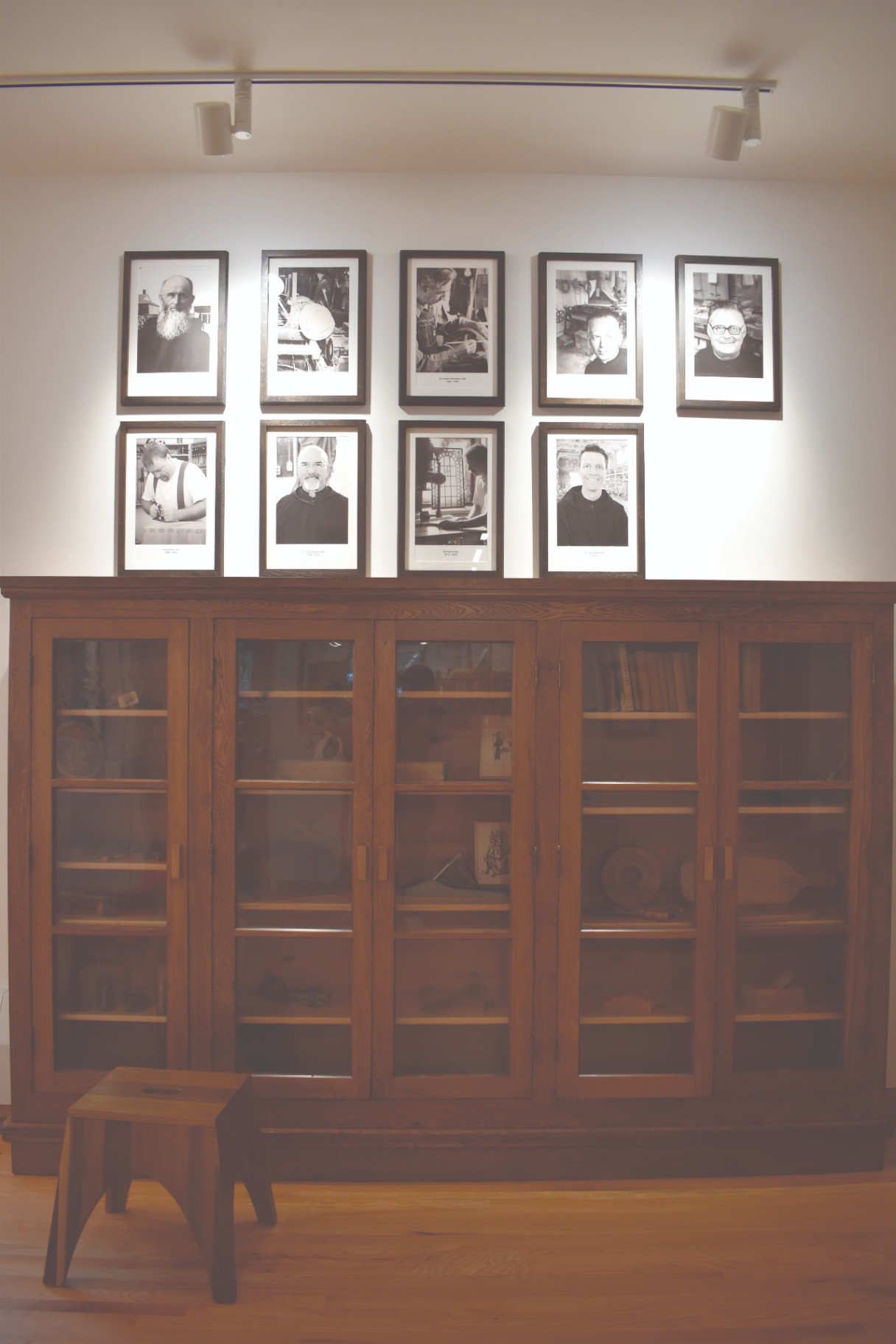
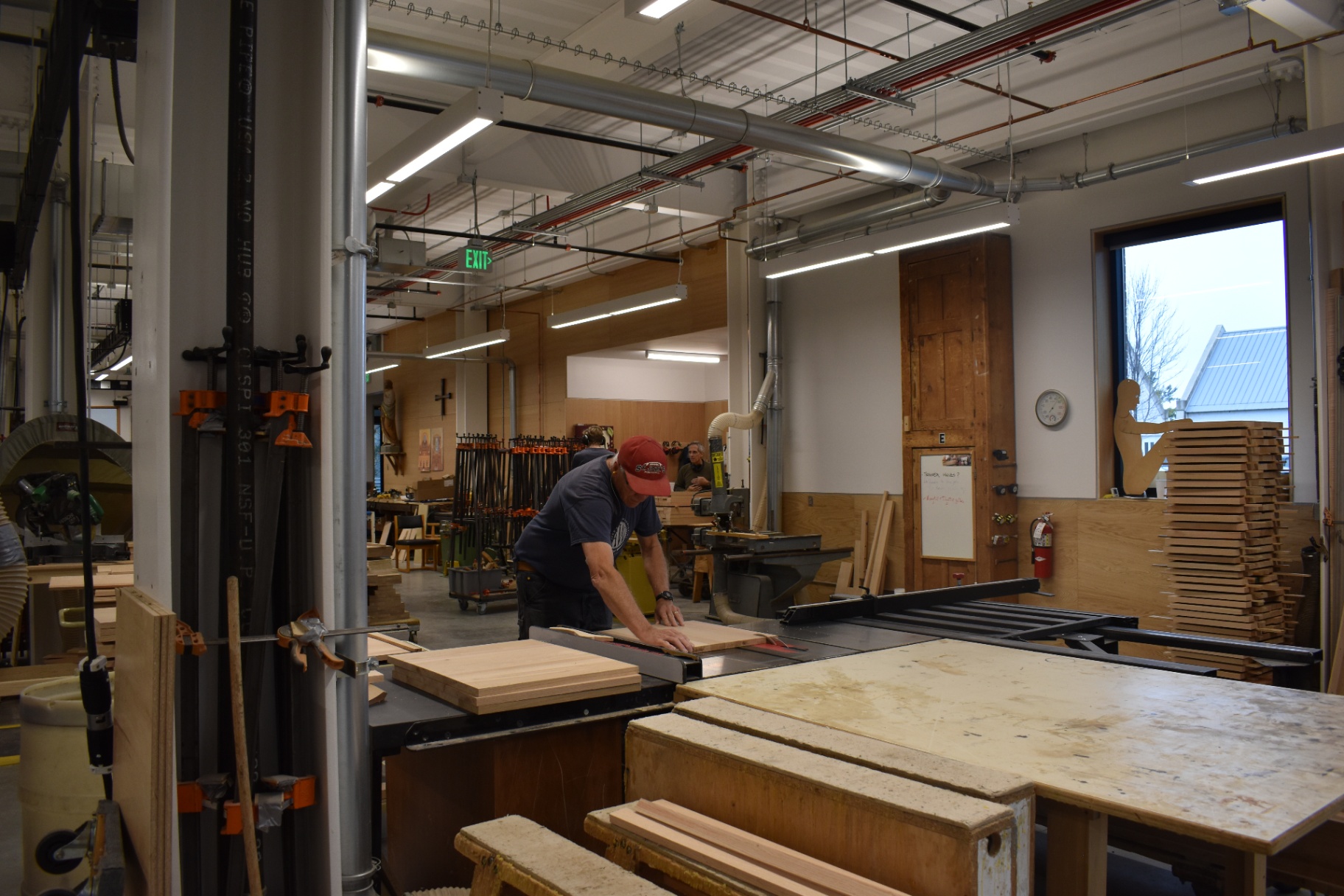
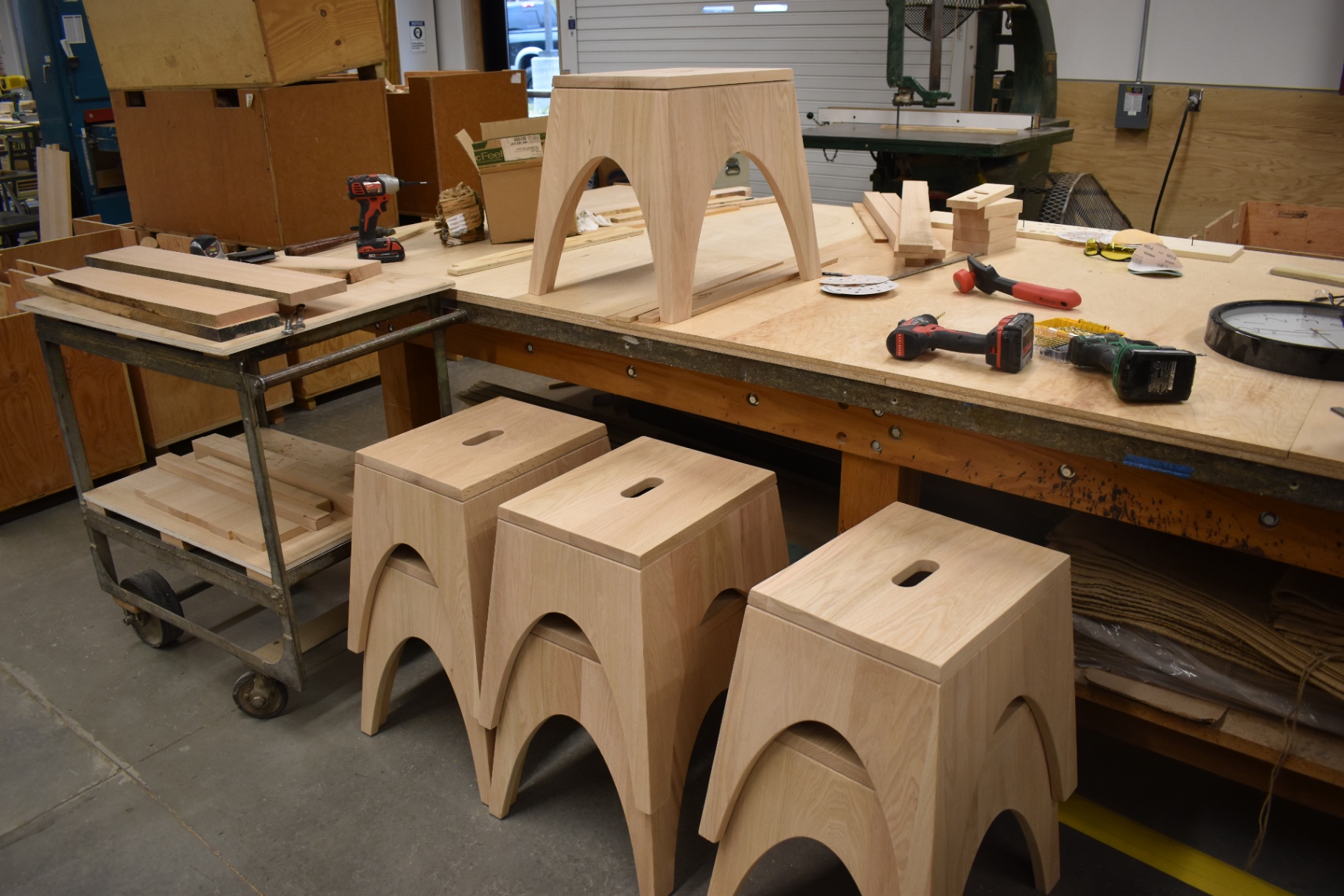
After the construction of a new building a little over a year ago, Abbey Woodworking and Organ Builders are settling into their new space on campus. For over 150 years, Abbey Woodworking has been the center for wooden creations and furniture across St. John’s. The wood used for projects done by Abbey Woodworking has been and is harvest across St. John’s land. The woodworking techniques are traditional and have been passed down throughout the shop.
Fr. Lew Grobe, O.S.B., is the director of Abbey Woodworking and Organ Builders. He explained that St. John’s is the only university known that harvests wood and creates furniture for dorm rooms, all on the same property that is owned by St. John’s. The whole operation is started and completed on the property that the materials come from.
“The resources come from here, it’s made by people who are here on campus and then it stays on campus. So that’s what I try to highlight, the uniqueness of that life of a dorm desk is a 120 year project, from when the tree is planted, to us letting it grow to the way where we can then harvest it sustainably and then make it into furniture that our own students are able to use,” Grobe said.
The desks, bedframes, chairs and bookshelves in St. John’s dorm rooms are all pieces designed and created by Abbey Woodworking. As many of those pieces were built over 60 years ago, they are beginning to refurbish and create new and updated pieces for the rooms. St. John’s Residential Life reached out to the woodshop with a 15-year plan to replace or refurbish the pieces, which they are approaching the end of.
The old pieces do not go to waste. Some pieces are put in the free store near Abbey Woodworking, where people can grab pieces to take home. Other pieces are taken back to the woodshop to refurbish, as many alumni buy them to have a piece of St. John’s in their home.
A few years ago, as President Brian Bruess and Carol Bruess settled into their new home at CSB+SJU in Renner House, they reached out to Abbey Woodworking about a larger dining room table to welcome people from all aspects of these communities into their home, honing in on the idea of integration. The woodworking team took elements from both campuses to design the table. From St. John’s, they were inspired by the Trees of Knowledge in Alcuin Library, which are the large concrete structures that reach from the floor to the ceiling on the first floor of Alcuin. This inspiration was used for the table legs as support structures. The tabletop shape was inspired by predella in Sacred Heart Chapel at St. Ben’s. These two elements combined make for a table symbolizing the integration of the two campuses, as well as the St. John’s Abbey Monastic Community and the St. Ben’s Monastery.
Around 70 percent of what Abbey Woodworking builds stays on campus. A large part of the 30 percent that doesn’t stay on campus are smaller projects like breadboards and St. John’s crosses that are made from extra scrap wood and sold in the bookstore, as well as St. John’s Bible cases.
“A case was just being shipped out to Salisbury, England, to Sarum College. We just installed one at St. Patrick’s Cathedral in New York City and the National Cathedral in Washington, D.C., just got one. There’s a lot of places that get St. John’s Bible cases. They get the St. John’s Bible, but then they also get a piece of the woodworking that’s from here as well,” Grobe said.
Grobe explained that scrap wood and sawdust are recycled and reused for different projects in the woodshop too. The organ pipes are not a part of that 70 percent, as most of the work done by the organ builders is shipped throughout the country, if not made for St. John’s. It is a one and a half to two-year process for each set of organ pipes.
The history runs deep in the woodshop. St. John’s began to grow fast after World War II. This growth showed an urgency for furniture in dormitories, and that is when Br. Hubert saw a need for the woodshop to expand. Abbey Woodworking bounced around different parts of St. John’s that allowed space for them. When Martin Pasi, a master organ builder from Austria, found St. John’s as the place to have a pipe organ center, the steps for a new building and space took stride. Pasi came over right before the COVID-19 pandemic hit to expand the organ in the St. John’s Abbey Church. When the pandemic hit, he was stuck at St. John’s. As he was here, he saw the possibilities of these communities.
“Martin said, ‘I have this dream of building a center for pipe organ building in the United States, and I think St John’s might be the only place that could do this,’” Grobe said. There is additional space for artists from the St. John’s Abbey Monastic Community to work and practice.
The sense of place at CSB+SJU is something Grobe sees as a key aspect of Abbey Woodworking. He finds that alumni do not realize the extent of the work done by the woodshop across St. John’s or even know there is a woodshop on campus. “Maybe half of the student population know about the extent of Abbey Woodworking. We get alumni that will come back and say, ‘how come I didn’t know there was a woodshop on campus?’ and then they’ll start to realize they were surrounded by it the whole time here. That connection finally comes that the way we care for things, that vow of stability, is unique to these two campuses. That’s also shown through this dedication to using resources from our own campus to provide for our own needs,” Grobe said.
Abbey Woodworking and Organ Builders have a variety of workers, student workers, apprentices and volunteers. Most workers and volunteers have a connection to St. John’s and St. Ben’s, ranging from a retired chemistry professor at CSB+SJU to recent graduates coming back to work. They currently have one apprentice with the organ builders, and they are gaining another in January.
The mission of Abbey Woodworking and Organ Builders is largely to build the lifelong passion for manual labor and craftsmanship.
“We hope we can teach and show people different skills, not just to look for a job in carpentry, but to create kind of a lifelong passion for manual labor and this craft for themselves. That mix of community, I don’t know if that really happens anywhere else,” Grobe said.