Teaching and learning valuable lessons in Rwanda
Benedictine monks gather outside of the main entrance outside of the Monastère de Gihindamuyaga.
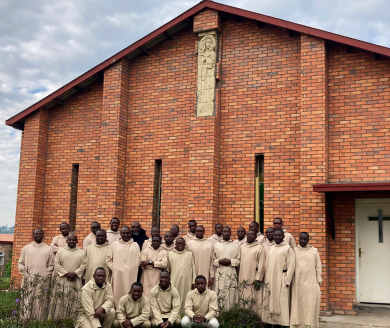
Monastère de Gihindamuyaga is located in the southern province of Rwanda, just 15 minutes outside of the city of Butare. In accordance with St. Benedict’s teachings, Gihindamuyaga (a Kinyarwanda word meaning ‘place where the wind originates’) is often dominated by silence. In those moments of silence, the voice of the wind is the only thing palpable aside from the voice of God. When silence subsides and the monastic community does speak, the language they use shifts rapidly between Kinyarwanda, French, English and even Swahili. To hear all four languages used in one conversation is not abnormal.
That propensity for language is two-fold at Ecole Autonome de Butare, the local school where my BVC partner Isak Brandt and I are teaching. The students we teach are between nine and 12 years old. They are adept language learners and are expected daily to engage with studies of Kinyarwanda (their primary tongue), French and English. During our time here, our responsibility lies in teaching English, which is rapidly moving to the forefront of spoken language in Rwanda.
After six weeks of living at Gihindamuyaga, we have settled into the rhythm of monastic life and community service, in great part thanks to the exceedingly welcoming community of brothers and fathers. Every day we attend prayer, eat meals and work, all alongside the monks. The schedule, much like at St. John’s, is marked by the ringing of bells. The two bells are sounded by hand, seven minutes in advance of prayer and mealtime; beginning with the first bell at 5:38 a.m. for Matines, and ending with the final bell at 8:23 p.m., which signals Vigils. Meals are eaten together in silence, or at times accompanied by soft music in French or Kinyarwanda.
During the week, Isak and I depart for school by van at 7:30 a.m., where we stay until around 5 p.m. Some days we head into town in the afternoon after we have finished teaching. Each day is different at the school, and the tight schedule that we are accustomed to in the USA is all but nonexistent here. Some days we may teach for as little as an hour, while others we may spend three or four hours teaching, reading to the students, helping them develop their conversational skills during lunch and directing the weekly English club. During play time we are crowded by a number of students looking to borrow from our makeshift library, talk to us in English or use the two American footballs that we keep tucked in the multipurpose room that we call our office. Isak had also brought two soccer balls, but the rough play and dirt playground made quick work of them, rapidly turning them to pulpy remains, hardly recognizable.
School officially ends at 5 p.m., at which point the van heads back to Gihindamuyaga just in time for Vespers at 5:30 p.m, followed by Mass at 6 p.m. On days where we have little to help with at school, after lunch Isak and I head into town to explore, or catch a motorcycle taxi back to Gihindamuyaga. Dinner is taken, in silence or accompanied by gospel music, at 7 p.m. Rice, beans and boiled cassava leaves form the base of both lunch and dinner at the monastery, and plantains are a common addition. Nearly all food consumed by the community is produced on the land owned by the monastery and prepared in a kitchen adjacent to the monastic dining room by a staff of five. Once prepared, meals are served by two of the monks on a rotating schedule. Following dinner, one of the four groups of monks is put in charge of dishes, while the rest retire to their rooms until Vigils.
Poor internet connectivity and the frequent power outages— diminishing in number lately—have allowed me to devote lots of time to reading and writing. To satisfy my love for music, I often borrow Brother Alexis’ guitar or use the electric piano located in the chapel. To keep active, I run over the undulating hills of Rwanda or exercise in my room. I also cherish the time spent conversing with the monks, who are helping me develop my language skills. The greatest proportion of my time, however, I spend meditating or in prayer.
St. John’s Abbey and Gihindamuyaga have, for several years now, fostered a strong partnership, and at the same time that we arrived to Rwanda two brothers were preparing for the long journey to St. John’s Abbey. If you happen to run into Brother Germain or Brother Védast at St. John’s Abbey, please return the kindness they showed to myself and Isak by greeting them in Kinyarwanda: Muraho, amakuru? – Hello, how are you?