CSB+SJU research on racial covenants continues
CSB+SJU students and faculty are continuing Great River Covenants research, delving into racial covenants in Benton, Sherburne and Stearns counties and examining how historic housing segregation impacts modern disparaties in quality of life in central Minnesota.
Brittany Merritt Nash from CSB+SJU’s history department is leading a research project that is uncovering evidence of racial covenants in St. Cloud and the surrounding rural communities — including St. Joseph and Collegeville. Racial covenants were clauses inserted into property deeds that prevented people who were not white from buying or occupying land in Minnesota, the United States and across the world.
From 1910 until the passage of the federal Fair Housing Act of 1968, racial covenants were a form of legally enforced segregation, and people could be barred from living in certain houses on the basis of their race. Racial covenants still exist on many home deeds across the state today but are no longer legally enforceable.
In 2016, researchers at the University of Minnesota began researching racial covenants through a program called Mapping Prejudice. It was started as an experiment, drawing on tools of the humanities and public history to locate racial restrictions in the Twin Cities area. The research is ongoing, and the goal of this project is to expose evidence of systemic racism and enhance reparations.
Much of the research on racial covenants in Minnesota has focused on urban areas such as Minneapolis and St. Paul. In the spring of 2023, honors students in Merritt Nash’s Community Histories class came up with the idea to expand the research to apply to our community in central Minnesota.
“They had learned about racial covenants in political science classes and history classes, and they wanted to know if there are racial covenants here in central Minnesota,” Merritt Nash said.
CSB+SJU students Eileen Otto ‘24, Olivia Schleper ‘24, Connor Veldman ‘24 and Robert Smith ‘24 began the research process. They worked alongside professors from St. Cloud State University to delve into historic racial covenants in Stearns, Sherburne and Benton Counties. They initially found 100 racial covenants across five neighborhoods. This ongoing research is titled the Great River Covenants Project and is slowly starting to influence the CSB+SJU curriculum.
“I asked around to find faculty members who were interested in the racial covenants work these students were doing. We all worked together to apply for a grant so that we could develop lesson plans and teaching materials that faculty can begin to use to inform curriculum here on campus.” Merritt Nash said.
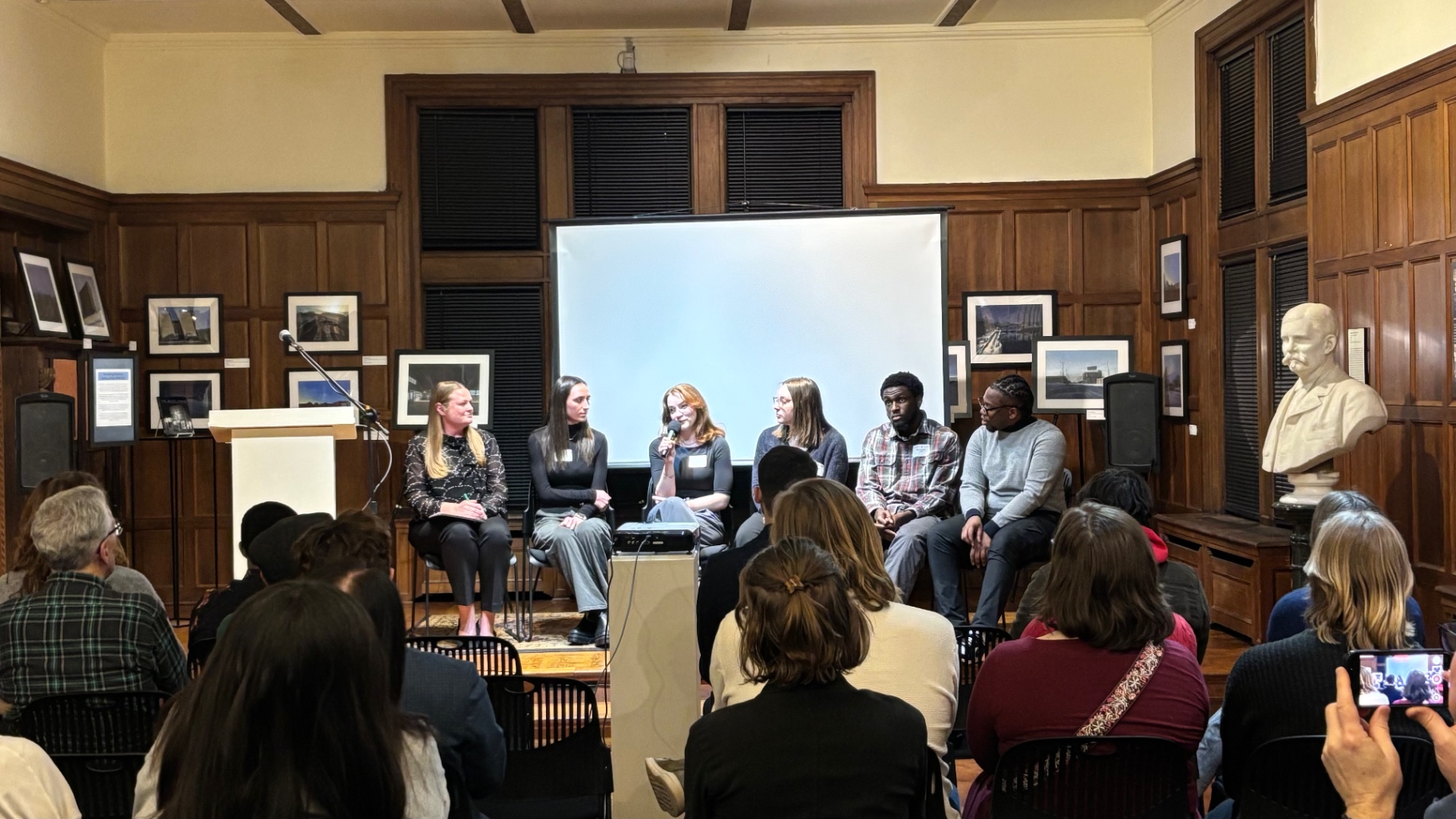
The work of Merritt Nash and previous students is continued by current students CSB junior Grace Jesch, CSB sophomore Grace Reiland, CSB senior Iliana Martinez, SJU junior De’Andre Forbes and SJU sophomore Bangaly Kaba.
The group has split responsibilities. Martinez, Forbes and Kaba focus on the historical implications and instances of racial covenants. Reiland and Jesch work with professors from the political science department to look at the long-term impact of racial covenants in central Minnesota.
“Everywhere that we have looked for racial covenants, we have found them. That’s true of St Joseph. That’s true of Collegeville. I think the same is true for their impact. Everywhere that you look for racial disparities, you will find them,” Jesch said.
Racial covenants have led to disparities in homeownership rates, generational wealth and access to high-quality schools and services that still impact many communities today.
“This segregation not only affects generational wealth, but also the kinds of education that people have access to. Residential segregation also led to segregated schools, and then also different health outcomes. The homes for white Americans tended to be located in areas with access to parks and green spaces. Areas occupied by non-white Americans tend to be closer to environmental hazards or high-traffic areas. Ultimately this leads to generational wealth consequences,” Merritt Nash said.
Extensive research has been done on racial covenants, their history and their effects in other parts of the country and other parts of Minnesota. However, not much has been done in central Minnesota and rural areas of the state.
“It’s important we acknowledge that not only were large cities segregated by racial covenants, but also rural and lakefront properties were segregated. It’s that idea of the Minnesota dream, right? Having your lake house — that also was off-limits to people based on racial covenants,” Merritt Nash said.
The Mapping Prejudice program is currently processing all the Stearns County property records. Once done, this will allow for a fuller understanding of exactly how many racial covenants were in Stearns County.
“I think there’s something impactful about learning about the history of the community we live in for four years. It gives context to some of the patterns we are seeing today, and I think it’s important to be an engaged and active learner and see our place in history,” Reiland said.
The homes that historically had restrictive covenants in place are still worth more today than homes lacking them. The deeds to homes still include this language even though it is no longer legally enforceable.
“In the United States, the impacts of racial covenants are ongoing. I think that makes it all the more important to dig into this research that we might feel an inclination to turn away from, whether it’s out of guilt or a lack of certainty on what to do. But I think that those feelings are why it’s so important to dive into it,” Jesch said.